All Types of Forklifts
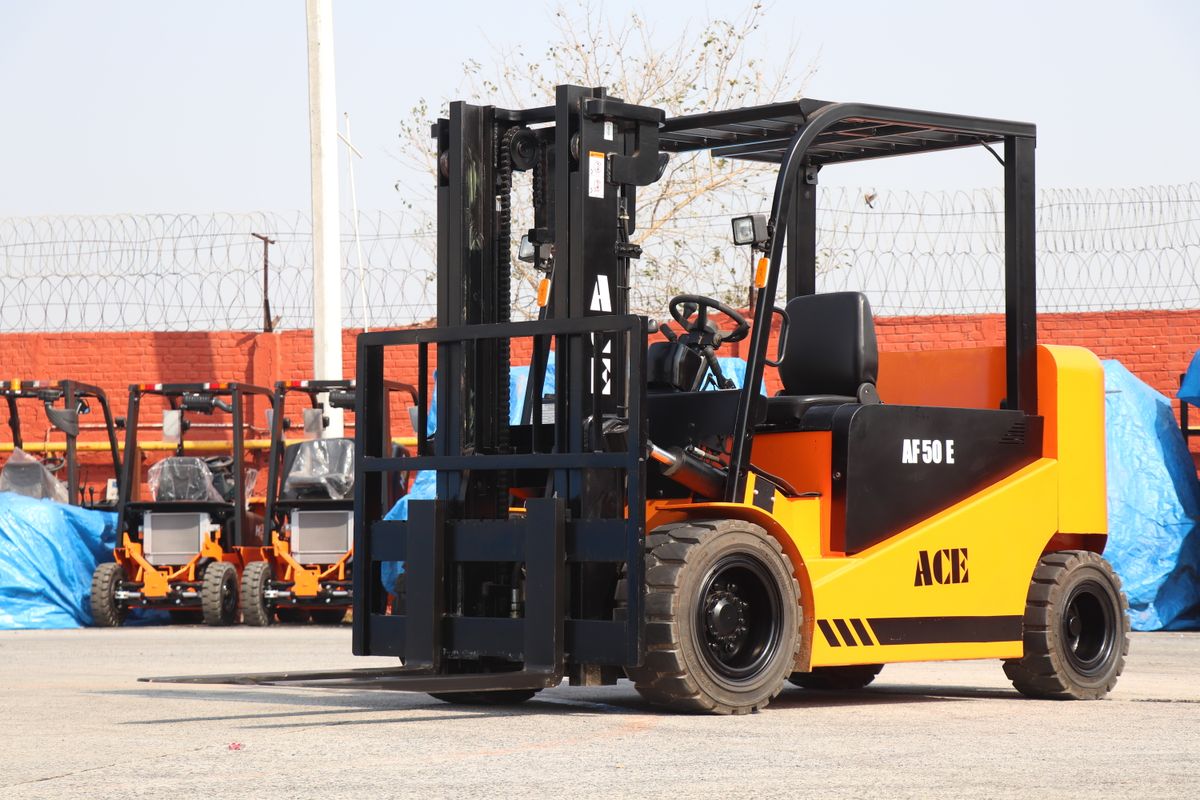
Explore the main forklift types, their uses, load capacities, and price ranges. Find the right lift for your warehouse operations.
Forklifts are the backbone of warehouse material handling, but choosing the right type can be overwhelming. This guide breaks down the main forklift classes, their typical applications, load capacities, and price ranges so you can make an informed decision for your facility.
Class 1: Electric Counterbalance Forklifts
Electric counterbalance forklifts are the most common type for indoor warehouse use. They run on battery power, produce zero emissions, and operate quietly. Their counterweight in the rear balances heavy loads, and they come in three or four-wheel configurations.
- Load capacity: 3,000 to 12,000 lbs
- Lift height: up to 20 feet or more
- Typical price: $25,000 to $60,000 new; $10,000 to $25,000 used
- Best for: indoor warehouses, loading docks, and facilities with smooth floors
These forklifts require battery charging stations and regular battery maintenance. If you run multiple shifts, you may need extra batteries or fast-charging systems.
Class 2: Electric Narrow Aisle Forklifts
Narrow aisle forklifts are designed to work in tight spaces, maximizing storage density. They include reach trucks, order pickers, and turret trucks. These machines are electric and ideal for warehouses with high racking and narrow aisles.
- Load capacity: 2,500 to 5,000 lbs (reach trucks), up to 3,000 lbs (order pickers)
- Lift height: up to 40 feet (turret trucks)
- Typical price: $20,000 to $50,000 new; $8,000 to $20,000 used
- Best for: high-density storage, order picking, and narrow aisle layouts
Narrow aisle forklifts require very smooth floors and specialized operator training. They are not suitable for outdoor use or rough terrain.
Class 3: Electric Pallet Jacks and Walkie Riders
Electric pallet jacks, also called power jacks or walkie riders, are simple, compact machines for moving pallets over short distances. The operator walks behind or rides on the unit. They are not designed for lifting high; they just raise pallets a few inches off the ground.
- Load capacity: 4,000 to 8,000 lbs
- Lift height: 6 to 12 inches
- Typical price: $3,000 to $10,000 new; $1,500 to $5,000 used
- Best for: loading/unloading trailers, moving pallets to staging areas, and order picking
These are the most affordable forklift type and are easy to operate. They are often used in conjunction with other forklifts for horizontal transport.
Class 4: Internal Combustion Cushion Tire Forklifts
IC cushion tire forklifts use gasoline, diesel, LPG, or CNG engines. They have solid rubber tires that are smooth, making them suitable for indoor use on hard surfaces. They offer high performance and fast lifting speeds, but they produce emissions and noise.
- Load capacity: 3,000 to 15,000 lbs
- Lift height: up to 20 feet
- Typical price: $20,000 to $50,000 new; $8,000 to $20,000 used
- Best for: heavy-duty indoor applications, loading docks, and facilities without strict emission regulations
Because they burn fuel, they require ventilation and regular engine maintenance. Fuel costs add up, but they are often cheaper upfront than electric models.
Class 5: Internal Combustion Pneumatic Tire Forklifts
IC pneumatic tire forklifts have large, air-filled tires with deep treads. They are designed for outdoor use on uneven surfaces, gravel, dirt, or mud. They can handle heavy loads and rough terrain.
- Load capacity: 4,000 to 35,000 lbs
- Lift height: up to 20 feet
- Typical price: $25,000 to $80,000 new; $10,000 to $30,000 used
- Best for: lumber yards, construction sites, agriculture, and outdoor storage yards
These forklifts are powerful and durable, but they are not suitable for indoor use due to emissions and tire damage on smooth floors. They also have a larger turning radius.
Class 6 and 7: Rough Terrain and Telehandlers
Class 6 covers rough terrain forklifts, and Class 7 includes telehandlers (also called boom lifts). These are specialized machines for construction and agriculture.
- Rough terrain forklifts: load capacity 5,000 to 12,000 lbs, price $30,000 to $70,000 new
- Telehandlers: load capacity 5,000 to 12,000 lbs, lift height up to 55 feet, price $50,000 to $120,000 new
- Best for: outdoor construction sites, farms, and uneven ground
Telehandlers have a telescopic boom that can place loads at height or reach over obstacles. They are versatile but require additional training and safety precautions.
How to Choose the Right Forklift
Follow these steps to select the right forklift for your warehouse:
- Assess your load weights and dimensions. Know the heaviest pallet you handle and its size.
- Measure your aisle widths and rack heights. This determines if you need a narrow aisle model or a standard counterbalance.
- Determine indoor vs. outdoor use. Indoor spaces favor electric, while outdoor use requires pneumatic tires and IC engines.
- Evaluate your floor conditions. Smooth concrete works for cushion tires; rough surfaces need pneumatic tires.
- Calculate total cost of ownership. Include purchase price, fuel or electricity, maintenance, and operator training.
- Check local emission regulations. Some states and cities restrict IC forklifts indoors.
- Test drive or rent before buying. Rent a model for a week to see if it fits your workflow.
Forklift Comparison Table
| Type | Load Capacity | Lift Height | Price Range (New) | Best For |
|---|---|---|---|---|
| Electric Counterbalance | 3,000-12,000 lbs | Up to 20 ft | $25,000-$60,000 | Indoor warehouses |
| Electric Narrow Aisle | 2,500-5,000 lbs | Up to 40 ft | $20,000-$50,000 | High-density storage |
| Electric Pallet Jack | 4,000-8,000 lbs | 6-12 in | $3,000-$10,000 | Horizontal transport |
| IC Cushion Tire | 3,000-15,000 lbs | Up to 20 ft | $20,000-$50,000 | Heavy indoor use |
| IC Pneumatic Tire | 4,000-35,000 lbs | Up to 20 ft | $25,000-$80,000 | Outdoor rough terrain |
| Telehandler | 5,000-12,000 lbs | Up to 55 ft | $50,000-$120,000 | Construction sites |
FAQ
Q: What is the most common forklift type in warehouses? A: Electric counterbalance forklifts (Class 1) are the most common for indoor warehouses because they are versatile, clean, and efficient.
Q: How much does a used forklift cost? A: Used forklift prices vary widely by type and condition. Electric pallet jacks can be as low as $1,500, while larger IC forklifts may range from $10,000 to $30,000.
Q: Do I need a special license to operate a forklift? A: Yes, OSHA requires forklift operators to be trained and certified. Certification involves formal instruction and a practical evaluation.
Q: How long do electric forklift batteries last? A: With proper maintenance, a lead-acid battery lasts 5 to 7 years, while lithium-ion batteries can last 10 years or more. Battery life depends on usage and charging habits.
The bottom line
Choosing the right forklift depends on your specific warehouse layout, load requirements, and budget. Start by evaluating your needs with the steps above, and consider renting before purchasing to test performance. Electric models are ideal for indoor use, while IC forklifts handle outdoor and heavy-duty tasks. Always factor in long-term costs like maintenance and fuel. With the right information, you can select a forklift that boosts productivity and safety for years to come.