Tire Pressure vs Load
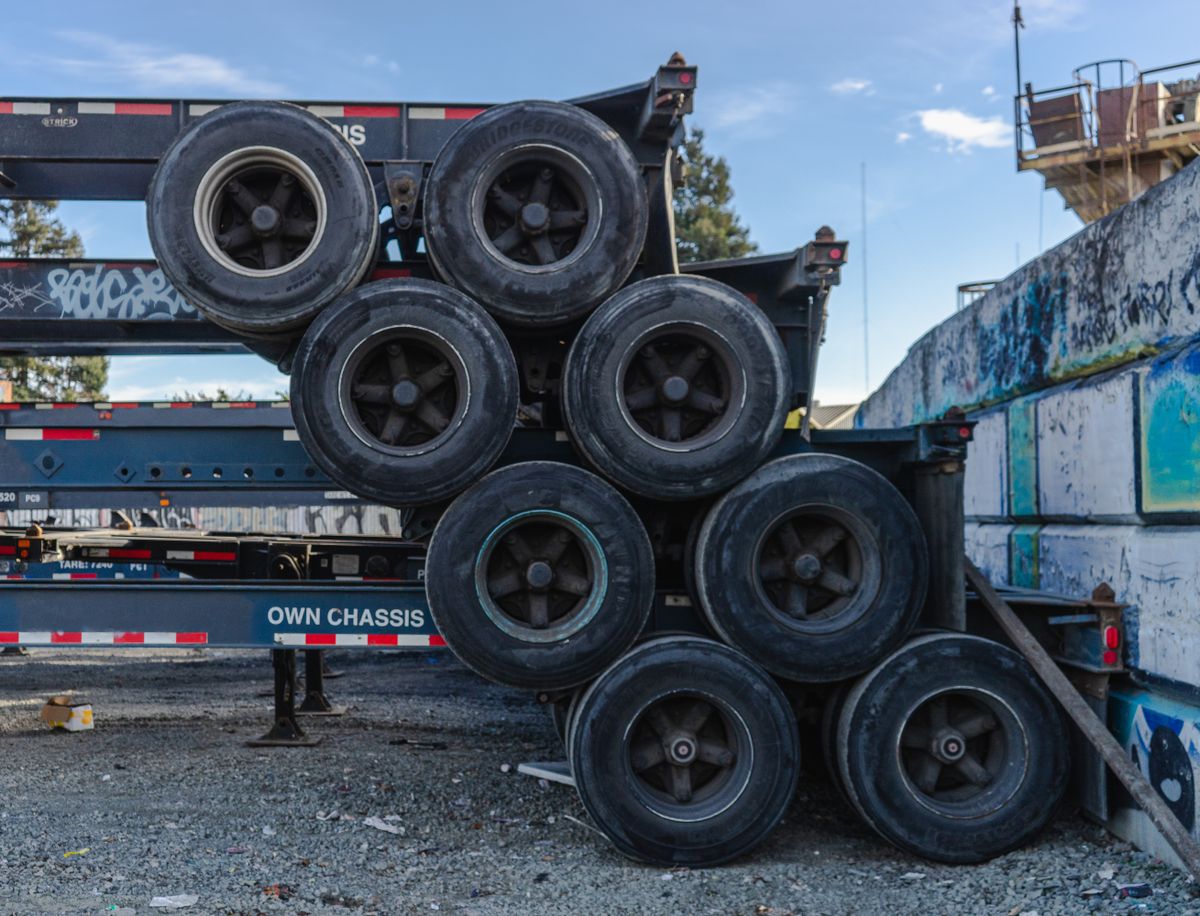
Learn how tire pressure and load interact, why correct inflation matters, and practical steps to optimize safety, fuel economy, and tire life.
Tire pressure and load are two sides of the same coin. Run a tire underinflated for its load, and you risk heat buildup, blowouts, and uneven wear. Overinflate, and you get a harsh ride, center wear, and reduced traction. The key is matching pressure to the actual load on each tire. Here’s how to get it right, with real numbers and steps you can take this week.
Why Load Determines Pressure
Every tire has a load rating and a corresponding inflation pressure. The higher the load, the more air pressure needed to support it. This relationship is not linear: it’s defined by the Tire and Rim Association load/inflation tables. For a typical 11R22.5 tire, a load of 5,000 pounds per tire might require 80 psi, while 6,000 pounds might require 95 psi. Check your tire’s sidewall for the maximum load at a given pressure, and always use the manufacturer’s tables for exact figures.
The Risks of Getting It Wrong
- Underinflation: Causes sidewall flexing, heat buildup, and can lead to tread separation or blowouts. It also increases rolling resistance, cutting fuel economy by up to 2% for every 10 psi below spec. Uneven shoulder wear is a telltale sign.
- Overinflation: Reduces the tire’s footprint, leading to center tread wear, a rougher ride, and increased susceptibility to impact damage. It also reduces traction, especially in wet conditions.
How to Set the Right Pressure
- Weigh your truck: Get actual axle weights at a certified scale. This is the only way to know the true load on each tire. Many truck stops have scales for a fee, or you can use a portable scale.
- Consult the load/inflation table: Find the table for your tire size and load range (e.g., Load Range G, H). Match the heaviest axle load to the required pressure, then add 5-10 psi as a safety margin for load shifts and heat.
- Check pressure cold: Always check when tires are cold, ideally before driving. Hot pressures can be 10-15 psi higher. Use a quality gauge, and check all tires, including the inner duals.
- Adjust for duals: For dual tires, the load is split between two tires, so each tire carries half the axle load. But the pressure should still be set based on the axle load, not half, because the load/inflation table already accounts for dual configuration.
Comparison: Inflation Strategies
| Strategy | How It Works | Pros | Cons | Cost Range (2026) |
|---|---|---|---|---|
| Fixed pressure (set to max sidewall) | Inflate to the maximum pressure listed on the sidewall | Simple, no calculations | Overinflation when lightly loaded, poor ride, center wear | $0 (just air) |
| Load-based pressure (set per axle) | Use load/inflation tables to match pressure to actual axle weight | Optimizes tire life and fuel economy | Requires weighing and table lookup | $0-$50 (scale fee) |
| Tire Pressure Monitoring System (TPMS) | Electronic sensors monitor pressure in real time | Alerts to leaks, reduces manual checks | Upfront cost, sensor battery replacement | $500-$2,000 per truck |
| Central Tire Inflation System (CTIS) | Adjusts pressure from the cab while driving | Allows on-the-fly adjustments for terrain | Expensive, heavy, mostly for off-road | $5,000-$15,000 |
| Nitrogen inflation | Uses nitrogen instead of air | Slower pressure loss, less oxidation | Cost, need to find nitrogen source | $10-$20 per tire fill |
| Automatic tire inflation (trailer) | Maintains pressure via a rotating union | Keeps trailer tires at correct pressure | Limited to trailers, can be complex | $1,500-$3,000 per trailer |
Practical Steps for This Week
- Check your current pressures: Note the cold pressures on all tires. Compare them to the sidewall maximum and to the load you’re actually carrying.
- Get a baseline weight: Visit a scale and record axle weights. Use that data to set pressures for your typical loads.
- Inspect tread wear: Look for signs of underinflation (shoulder wear) or overinflation (center wear). Use a tread depth gauge to measure.
- Invest in a good gauge: A dual-head gauge with a hose is easier to use on duals. Calibrate it annually.
- Set a reminder: Check tire pressures at least once a week, or daily if you’re running heavy loads.
FAQ
Q: What’s the ideal tire pressure for a loaded 18-wheeler? A: It depends on the tire size and load. For a typical 11R22.5 tire with a load of 5,500 pounds per tire, you might run 90-95 psi. Always consult the load/inflation table for your specific tire.
Q: Can I run a higher pressure to save fuel? A: Slightly higher pressure can reduce rolling resistance, but overinflation leads to uneven wear and reduced traction. Stick to the load-based pressure, plus a small margin (5-10 psi) for safety.
Q: How often should I check tire pressure? A: At least weekly, and before every trip if you’re carrying heavy loads. Temperature changes can affect pressure: expect a 1-2 psi change for every 10°F.
Q: What’s the cost of a TPMS? A: A basic TPMS for a tractor can cost $500-$1,500, plus installation. For trailers, expect $1,000-$2,000. The fuel savings and reduced tire wear often pay for it within a year.
The Bottom Line
Tire pressure and load are inseparable. The right pressure is not a fixed number; it’s a function of the load you’re carrying. Weigh your truck, consult the tables, and check pressures regularly. This simple discipline will extend tire life, improve fuel economy, and keep you safer on the road. Don’t guess: measure and adjust.