Automatic Tire Chains for Trucks
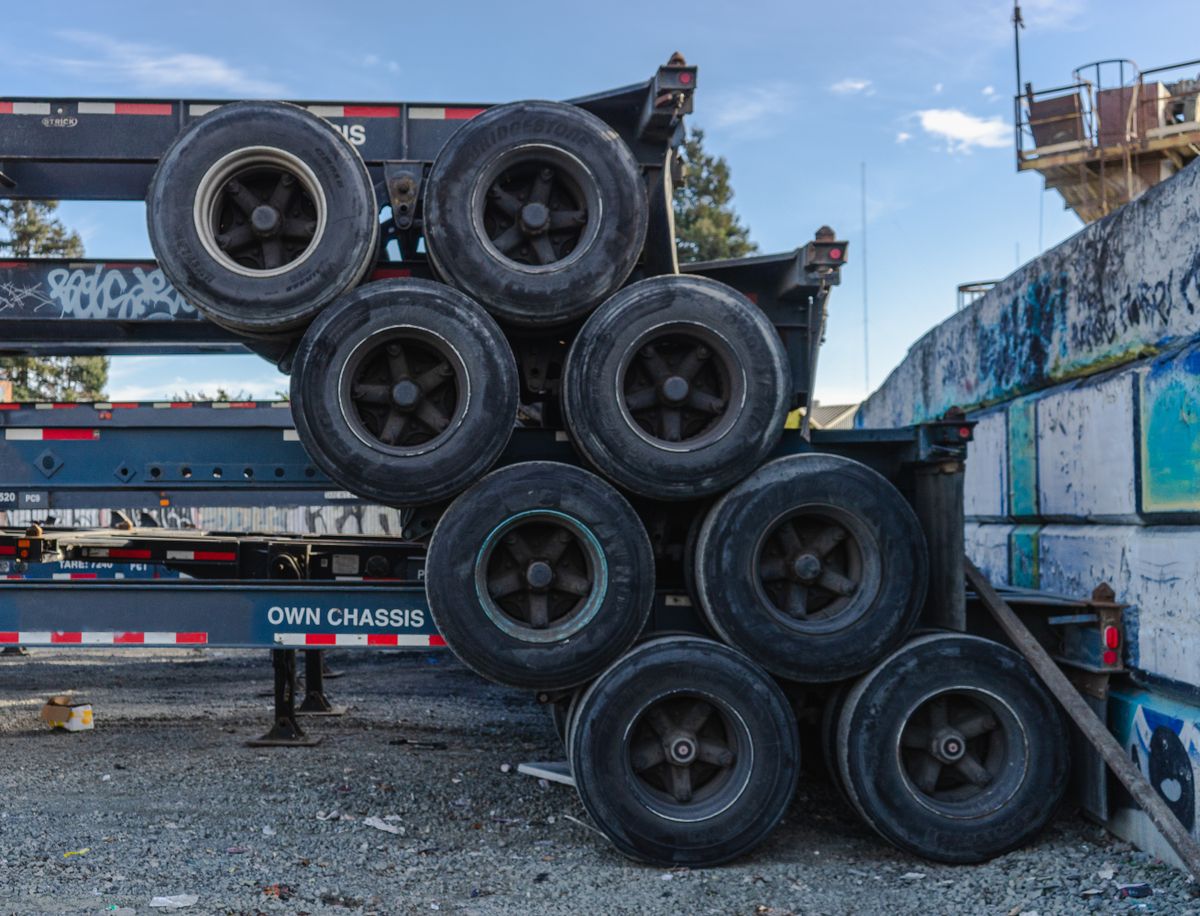
Learn how automatic tire chains work, costs, installation, and whether they're worth it for your truck. Practical guide with real numbers.
Automatic tire chains (also called on-demand chains) are a system that deploys chains over your drive tires at the flip of a switch, without stopping the truck. They are a real option for drivers who run in mountain passes, icy roads, or states with chain laws. This guide covers how they work, what they cost, what to expect, and whether they make sense for your operation.
How Automatic Tire Chains Work
Automatic tire chains are mounted on the suspension or frame near the drive axle. When you activate the system from inside the cab, a mechanism swings a chain assembly down so the chains contact the tire tread. The tire rotation carries the chains under the tire, providing traction. When you turn the system off, the chains retract out of the way.
Key components:
- Chain head: the part that holds the chains and swings into position.
- Air or electric actuator: powers the deployment. Most systems use air, but some electric versions exist.
- Control switch: mounted on the dash, usually a simple toggle or button.
- Chains: typically made of hardened steel, similar to standard tire chains but designed for repeated use.
The system only works on drive tires, not steer or trailer tires. It is not a replacement for good winter tires or proper speed reduction. It is a convenience and safety aid that helps you avoid stopping to chain up in bad weather.
Cost of Automatic Tire Chains
Expect to pay between $4,000 and $8,000 per axle for a quality system, including parts and installation. That is for a single drive axle. If you have a tandem axle, you will need two systems, so double the cost. Some high-end systems can run up to $10,000 per axle, but that is rare.
Installation is usually done by a truck equipment shop. The cost includes the hardware, chains, wiring or air lines, and labor. Some shops charge extra for custom mounting if your suspension is not standard.
Here is a rough cost breakdown:
| Item | Cost Range |
|---|---|
| System hardware (per axle) | $3,000 - $6,000 |
| Installation labor | $500 - $1,500 |
| Replacement chains (per set) | $300 - $600 |
| Annual maintenance (parts and labor) | $200 - $500 |
If you run a fleet, you may get volume discounts. But for an owner-operator, plan on $5,000 to $8,000 per axle as a realistic budget.
Pros and Cons
Pros:
- No stopping to chain up in bad weather. You can deploy chains while rolling at low speed (under 25 mph).
- Safer: you stay in the cab, out of traffic and weather.
- Saves time: no 30-45 minutes spent wrestling chains in the cold.
- Can help you avoid getting stuck or violating chain laws.
- Retractable: you can remove traction when you hit clear pavement, reducing wear and damage.
Cons:
- High upfront cost.
- Adds weight to the truck (about 200-300 lbs per axle).
- Requires maintenance: chains wear out, actuators can fail, and you need to inspect regularly.
- Not a substitute for proper winter tires or speed control.
- May not be legal in all states? Actually, most states accept them as an alternative to standard chains, but check local rules. Some states require that you still carry standard chains in the vehicle.
- Limited to drive axle; you still need to manage steer and trailer traction.
Installation and Maintenance
Installation should be done by a professional. The system must be aligned correctly so the chains contact the tire evenly. If misaligned, they can cause vibration or damage.
Maintenance is straightforward but critical:
- Inspect chains monthly for wear or broken links.
- Check the actuator and air lines for leaks or corrosion.
- Test the system at the start of winter and before any mountain run.
- Replace chains when links are worn or stretched. A set typically lasts 10,000 to 20,000 miles of actual use, depending on conditions.
You can do basic checks yourself, but if you see any issue, have a shop look at it.
How to Use Them Effectively
Using automatic chains is simple, but there are best practices:
- Deploy chains before you need them. If you see snow or ice ahead, activate the system at low speed (under 25 mph).
- Keep your speed under 25 mph when chains are deployed. Faster speeds can damage chains and tires.
- Retract chains as soon as you hit clear pavement. Running on chains on dry road wears them out fast.
- Practice in a safe area before you need them. Know how the switch feels and how the truck responds.
- Carry standard chains as a backup. If your automatic system fails, you still need to comply with chain laws.
Who Should Consider Them
Automatic chains are worth it if you:
- Regularly run mountain passes like I-70 in Colorado, Donner Pass in California, or I-84 in Oregon.
- Haul time-sensitive freight where delays cost money.
- Drive solo and want to avoid the physical strain and danger of manual chaining.
- Operate in states with strict chain laws, where being caught without chains can mean fines and shutdowns.
They are less useful if you stay in the South or Southwest and rarely see snow. In that case, the cost is hard to justify.
Alternatives to Automatic Chains
If the price is too high, consider these options:
- Standard tire chains: $200-$400 per set, but you have to stop and install them.
- Tire socks: fabric traction aids, $100-$200 per pair, but they wear out fast and are not legal in some states.
- Winter tires: $300-$500 per tire, but they do not meet chain laws in many areas.
- On-board air systems: not for chains, but you can air down tires for better traction, but that is not a chain substitute.
None offer the convenience of automatic chains, but they cost less.
FAQ
Are automatic chains legal in all states? Most states accept them as an alternative to standard chains, but some require that you still carry standard chains in the vehicle. Check the chain law for each state you run in. For example, California and Colorado allow them, but you must have standard chains on board.
How fast can I go with automatic chains deployed? Manufacturers recommend staying under 25 mph. Some systems allow up to 30 mph, but that increases wear and risk. Keep it slow.
How long do automatic chains last? The chains themselves last 10,000 to 20,000 miles of actual use. The system hardware should last the life of the truck with proper maintenance.
Can I install automatic chains myself? Not recommended. It requires precise alignment and integration with your air or electrical system. A professional installation ensures safety and warranty coverage.
The Bottom Line
Automatic tire chains are a significant investment, but they can save you time, reduce risk, and keep you moving in winter conditions. If you run in snowy regions regularly, they pay for themselves in avoided delays and reduced stress. If you rarely see snow, stick with standard chains and save your money. Regardless, always carry manual chains as a backup and know your state’s chain laws. Make a decision based on your routes, your budget, and your tolerance for cold-weather chaining.