Auto Tires Review for Trucks
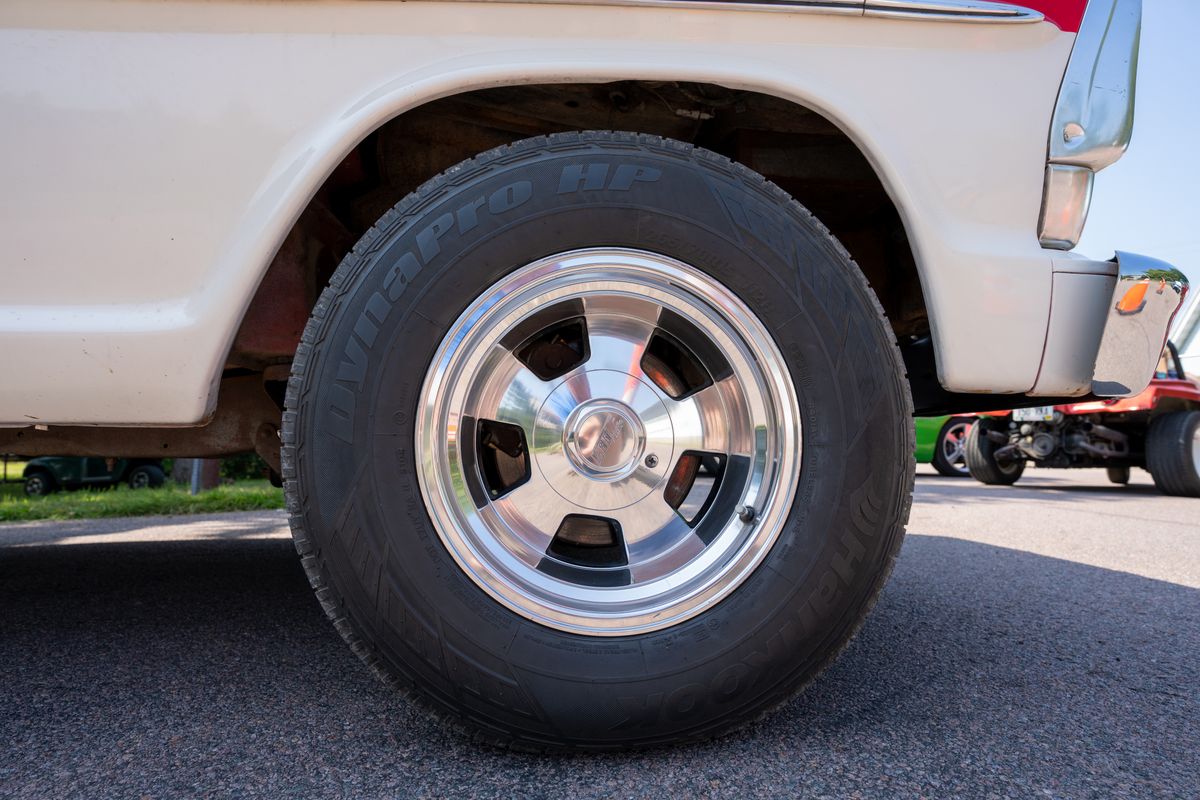
Can you use auto tires on a truck? We review the risks, costs, and legal issues, plus when it might work for light loads.
The short answer: no, you should not put auto tires on a truck, except in very limited cases like a light-duty pickup used for commuting. Auto tires are not built for the weight, heat, and stress of truck use. They can fail, cause accidents, and get you fined. This guide explains why, what the real differences are, and what to do instead.
Why Auto Tires Fail on Trucks
Auto tires are designed for vehicles under 4,500 pounds GVWR (gross vehicle weight rating). Trucks, even light ones, often exceed that when loaded. The tire’s sidewall and tread are not reinforced to handle the extra weight. Heat builds up faster, especially at highway speeds. That heat can cause a blowout, which is dangerous at 65 mph.
Also, auto tires have a lower load index. For example, a typical passenger tire has a load index of 105 (about 2,028 pounds per tire). A light truck tire might have a load index of 121 (about 3,197 pounds per tire). That’s a huge difference. If you put auto tires on a loaded truck, you are overloading them by 30% or more.
Legal and Safety Issues
Using auto tires on a truck can violate federal regulations if you are in commercial operation. The Federal Motor Carrier Safety Administration (FMCSA) requires that tires meet the load rating for the vehicle’s axle weight. If you are caught with underrated tires, you can be placed out of service. Fines range from $100 to $500 per violation. In a crash, you could be liable for negligence.
Even for personal use, it’s unsafe. The National Highway Traffic Safety Administration (NHTSA) has no specific ban, but tire manufacturers void warranties if you use tires outside their intended service. You are on your own if something fails.
When Auto Tires Might Be Okay
There is one exception: a light-duty pickup truck (like a Ford F-150 or Chevy Silverado 1500) used only for commuting and light loads, never towing or hauling heavy cargo. In that case, you can use passenger car tires (P-metric) if they meet the load rating for your truck’s empty weight. Check the door sticker for the original tire size and load index. If you replace with the same size and load rating, it’s legal.
But if you ever plan to haul a camper, tow a trailer, or carry a heavy load in the bed, switch to LT (light truck) tires. LT tires have stronger sidewalls and higher load ratings.
What to Use Instead: LT vs. Commercial Tires
For trucks, you have two main options:
- LT (Light Truck) tires: For pickups and light commercial vehicles. They have reinforced sidewalls and higher load ratings. Prices range from $120 to $300 per tire.
- Commercial tires: For heavy-duty trucks, like Class 8 semis. These are 22.5-inch or 24.5-inch wheels, with load ratings up to 5,000+ pounds per tire. Prices range from $300 to $600 per tire.
Here’s a quick comparison:
| Tire Type | Typical Vehicle | Load Index Range | Price Range (per tire) | Best For |
|---|---|---|---|---|
| Passenger (P) | Cars, SUVs, light pickups (unloaded) | 100-110 | $80-$200 | Commuting, light loads |
| LT (Light Truck) | Pickups, vans, small commercial | 110-125 | $120-$300 | Hauling, towing, off-road |
| Commercial (Truck/Bus) | Semi-trucks, heavy trucks | 125-154 | $300-$600 | Long-haul, heavy loads |
How to Choose the Right Tire for Your Truck
- Check your truck’s GVWR and GAWR: Look at the door sticker on the driver’s side. It lists the gross axle weight rating (GAWR) for front and rear. You need tires that can handle at least that weight.
- Find the load index: The load index is a number on the tire sidewall (e.g., 121). Use a load index chart to see the pounds per tire. Multiply by the number of tires on the axle to get the total capacity.
- Match the speed rating: Trucks often need a higher speed rating (like S or T) for sustained highway speeds. Check your owner’s manual.
- Consider the terrain: If you drive off-road or on gravel, choose an all-terrain LT tire. For highway only, a highway rib tire is fine.
- Buy from a reputable brand: Stick with major brands like Michelin, Bridgestone, Goodyear, or Continental. They have tested their tires for truck use.
Cost of Proper Truck Tires
LT tires cost between $120 and $300 each, depending on size and brand. Commercial tires for semi-trucks cost $300 to $600 each. Installation and balancing add $20 to $50 per tire. If you are a fleet owner, you can get volume discounts. Expect to replace LT tires every 40,000 to 60,000 miles, and commercial tires every 100,000 to 150,000 miles.
FAQ
Can I use auto tires on a 3/4-ton truck? No. 3/4-ton trucks (like F-250 or Silverado 2500) have a GVWR over 8,000 pounds. Auto tires are not rated for that. You need LT or commercial tires.
What happens if I get pulled over with auto tires on my truck? If you are in a commercial vehicle, you can be placed out of service and fined. For personal use, you might get a warning, but it’s still unsafe.
Are there any auto tires that can handle truck loads? No. Auto tires are designed for passenger vehicles. Even the strongest passenger tire cannot match an LT tire’s load capacity.
How do I know if my current tires are LT or P? Look at the sidewall. If it starts with “P” (e.g., P235/75R15), it’s a passenger tire. If it starts with “LT” (e.g., LT245/75R16), it’s a light truck tire.
The Bottom Line
Auto tires are not for trucks, period. They are not built for the weight, heat, or stress. Using them is dangerous and can be illegal. If you drive a light pickup for commuting only, you might get away with it, but the moment you haul anything, switch to LT tires. For heavy trucks, use commercial tires. Check your load ratings, buy quality tires, and stay safe on the road. Your life and your livelihood depend on it.
Last checked: January 2026. Regulations may change; always verify current FMCSA rules.