Auto Tire Chains Trucks
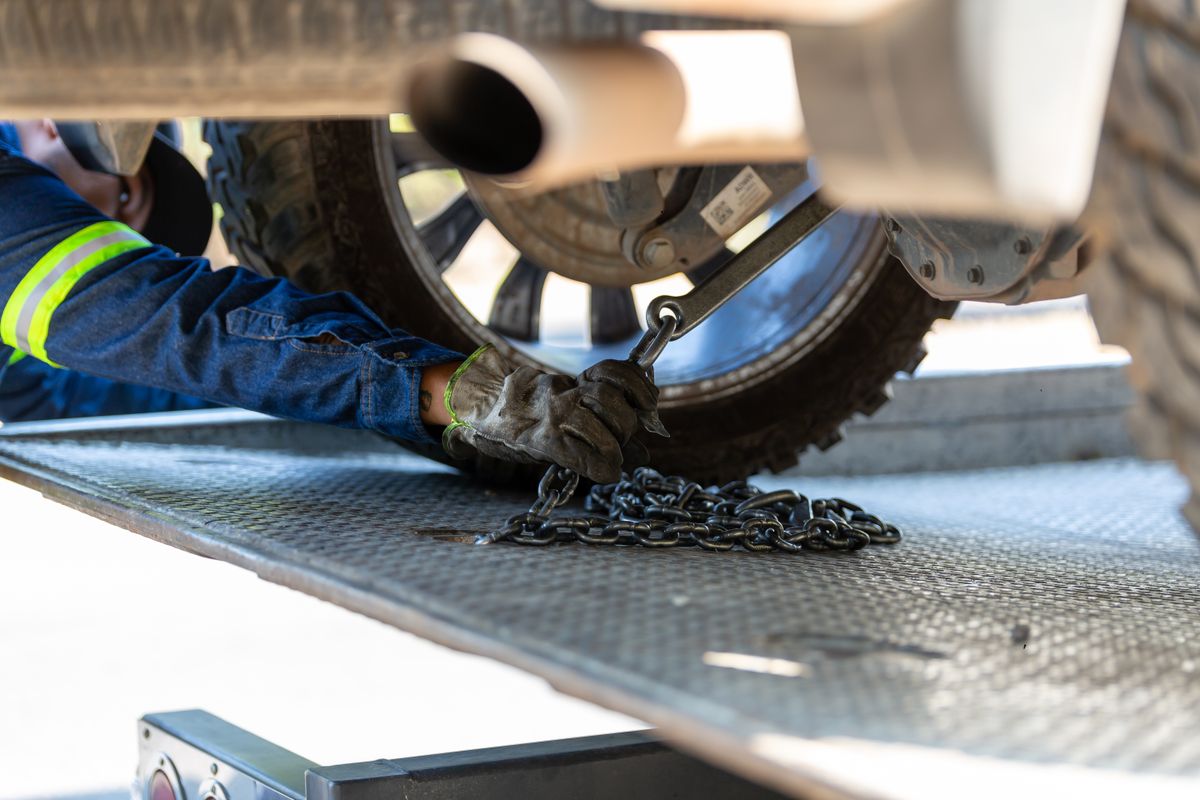
Learn how automatic tire chains work for trucks, costs, installation, and whether they're worth it for your fleet in 2026.
Automatic tire chains (auto chains) are a game changer for truck drivers who run in mountain passes or icy regions. Instead of stopping to chain up manually, you flip a switch in the cab and chains engage on your drive tires while rolling. This guide explains how they work, what they cost, and how to decide if they fit your operation.
How Auto Tire Chains Work
Auto tire chains are a permanently mounted system on the truck’s drive axles. A small air cylinder pushes a chain mechanism down onto the tire tread when you activate a switch in the cab. The chains rotate with the tire, providing traction on ice or snow. When you deactivate the system, the chains retract into a housing above the tire, clear of the tread.
Most systems mount on the rear drive axle of a tandem setup, but you can install them on both drive axles for extra traction. The activation is instant, even while rolling at low speed (under 25 mph). This means you can chain up without stopping, which saves time and keeps you moving in chain-control areas.
Benefits and Drawbacks
Benefits:
- No more manual chaining in freezing weather, which reduces injury risk and downtime.
- Faster chain-up: seconds instead of 20-30 minutes.
- Can engage and disengage as conditions change, without stopping.
- Reduces wear on tires compared to running with loose chains that can slap and damage sidewalls.
Drawbacks:
- High upfront cost: $6,000 to $12,000 per axle, installed.
- Adds weight: about 150-200 lbs per axle.
- Requires maintenance: air lines, solenoids, and chain wear.
- Not a substitute for proper winter tires; you still need good tread depth.
- Some jurisdictions require physical chains for certain conditions, and auto chains may not meet those specific chain laws (check state regs).
Cost and Installation
Typical cost for a complete auto chain system on one drive axle ranges from $6,000 to $12,000, including parts and installation. The price varies by brand (Onspot, RUD, or Zero Gravity), axle configuration, and whether you install it yourself. Installation takes 4-8 hours at a shop, so labor is included in that range.
If you run a fleet, you might get volume discounts. Some leasing companies offer auto chains as an option on new trucks. For owner-operators, the payback comes from avoiding delays and chain-up fines, which can be $500 or more per incident.
Top Brands and Options
| Brand | Type | Price Range (per axle) | Notes |
|---|---|---|---|
| Onspot | Automatic tire chain system | $7,000-$10,000 | Most common, air-activated, reliable |
| RUD | Roto-Trak | $8,000-$12,000 | Heavy-duty, used in extreme conditions |
| Zero Gravity | Automatic chains | $6,000-$9,000 | Lighter weight, newer brand |
| Manual chains | Traditional | $200-$400 per set | Cheap but require stopping and manual labor |
Installation and Maintenance Tips
Installation:
- Have a certified shop install the system to ensure proper alignment and air connections.
- Check that the chains clear the suspension and brake components.
- Test the system before hitting the road.
Maintenance:
- Inspect chains monthly for wear or damage.
- Lubricate moving parts per manufacturer specs.
- Check air pressure and lines for leaks.
- Replace chains when links show significant wear (usually every 2-3 seasons).
Legal and Regulatory Considerations
Chain laws vary by state and province. Some states, like California and Colorado, require chains on all vehicles during chain-control events. Auto chains are generally accepted, but you must verify that your system meets the specific requirement. For example, California’s chain control allows auto chains as long as they are installed on the drive axle and meet the definition of “tire chains.” Always carry a set of manual chains as backup in case your auto system fails.
Check current regulations with your state’s DOT or the CVSA before relying solely on auto chains.
How to Decide If Auto Chains Are Right for You
Ask yourself these questions:
- Do I regularly drive in mountainous or snowy regions? If yes, auto chains save significant time.
- Can I afford the upfront cost? If you’re an owner-operator on a tight budget, manual chains might be more practical.
- Do I have a maintenance routine? Auto chains need attention; if you skip maintenance, they’ll fail when you need them.
- What’s my time worth? If you get paid by the mile, avoiding a 30-minute chain-up can pay off over a season.
For a fleet, the ROI is clearer: fewer delays, fewer accidents, and less driver turnover due to harsh conditions.
FAQ
Q: Can auto chains be used on steer axles? A: Most systems are designed for drive axles only. Steer axle chains are rare and not recommended due to steering interference.
Q: Do auto chains work on all tire sizes? A: No, they are designed for specific tire widths and diameters. Check compatibility with your tire size before buying.
Q: Are auto chains legal in all states? A: Most states accept them, but some have specific requirements. Always check local chain laws and carry manual chains as backup.
Q: How long do auto chains last? A: With proper maintenance, the chains themselves last 2-3 seasons. The system components can last the life of the truck if serviced.
The Bottom Line
Auto tire chains are a smart investment for drivers who regularly face winter conditions. They cost $6,000 to $12,000 per axle but save time, reduce risk, and keep you moving when manual chaining is a hassle. If you’re a fleet owner, they improve safety and efficiency. If you’re an occasional winter driver, stick with manual chains and save the money. Weigh your routes, budget, and maintenance capacity before deciding. And always have manual chains onboard as a backup, because even the best auto system can fail.