Army Truck Tires Maintenance
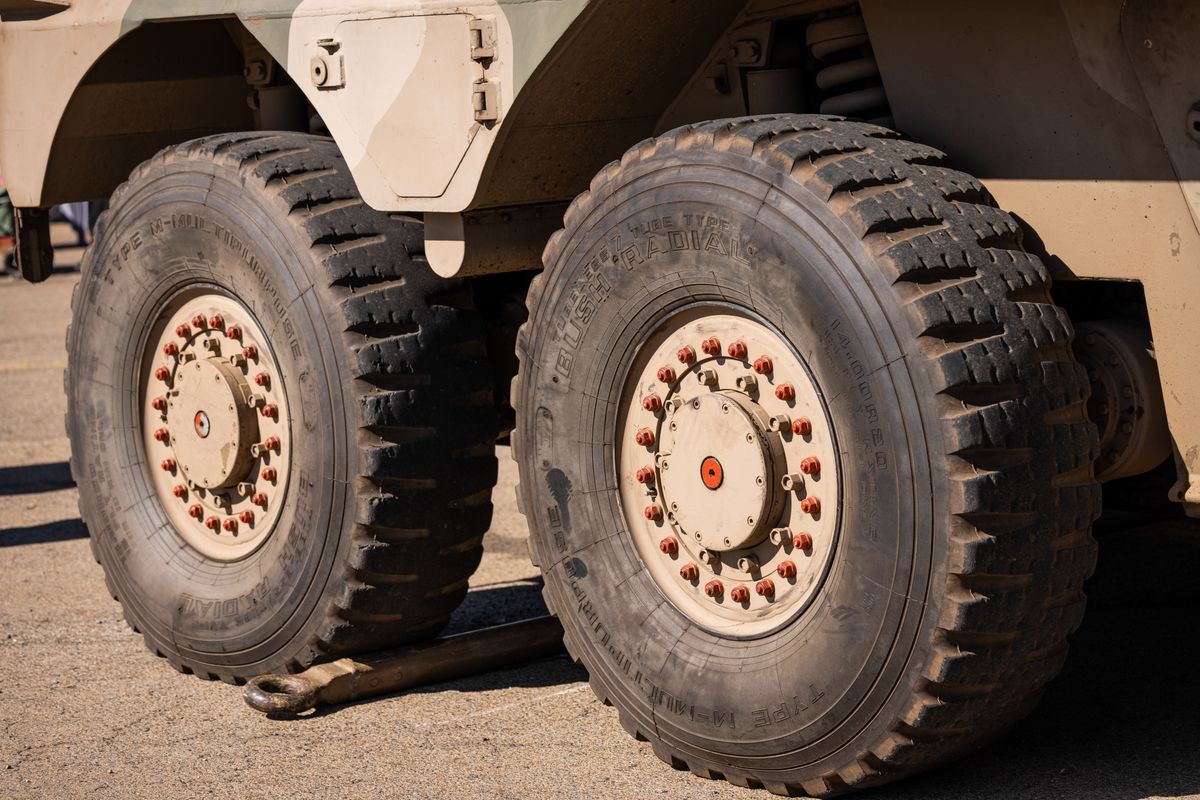
Learn how to maintain military truck tires for safety and longevity. Covers pressure, wear, storage, and field repairs with practical steps.
Maintaining tires on military trucks is not the same as civilian rigs. The loads are heavier, the terrain is rougher, and the stakes are higher. If you’re running an M939, an LMTV, or a HEMTT, tire care is a combat multiplier. This guide gives you the straight facts on pressure, wear, storage, and field repairs, with numbers you can use today.
Why Military Tire Maintenance Differs
Military trucks operate under conditions that civilian fleets rarely see: sustained high speeds on highways, deep mud, sand, rock, and sometimes combat damage. Tires are often run at higher load ratings and with central tire inflation systems (CTIS) that alter pressure on the fly. The military uses specific tire types like the 395/85R20, 14.00R20, and 16.00R20, each with its own load index and pressure specs. Neglect leads to blowouts, stuck vehicles, and mission failure.
Tire Pressure: The Non-Negotiable
Check tire pressure daily, before the first move, when tires are cold. Use a calibrated gauge, not the one from the gas station. For most military trucks, pressures range from 40 psi (for soft sand) to 110 psi (highway). The exact figure is on the data plate near the driver’s seat or in the TM (Technical Manual).
Set pressures according to the terrain and load. For a loaded LMTV on highway, run 100-110 psi. In sand, drop to 40-50 psi if the CTIS allows it. Never exceed the maximum pressure molded on the sidewall. Overinflation reduces traction and causes center wear; underinflation causes shoulder wear and heat buildup, which is the #1 cause of blowouts.
How to Check Pressure
- Remove the valve cap.
- Press the gauge firmly onto the valve stem.
- Read the pressure, compare to spec.
- Add or release air as needed.
- Recheck after adjusting.
Do this for all tires, including spares. A spare that’s low is no spare at all.
Tire Wear Patterns and What They Mean
Read the tread like a mechanic reads a dipstick. Wear tells you what’s wrong.
| Wear Pattern | Cause | Fix |
|---|---|---|
| Center wear | Overinflation | Reduce pressure |
| Shoulder wear | Underinflation | Increase pressure |
| One-sided wear | Misalignment | Check toe/camber |
| Cupping | Out-of-balance or worn shocks | Balance tires, inspect suspension |
| Erratic wear | Worn steering parts | Inspect tie rods, ball joints |
Check tread depth with a gauge. The military minimum is 4/32 inch for drive tires, 2/32 for steer, but replace at 6/32 if you’ll be in mud or snow. Use a penny: if you can see the top of Lincoln’s head, you’re at 2/32 and it’s time to swap.
Field Repairs: Plug, Patch, or Replace?
In the field, you have three options. Know when to use each.
- Plug (temporary): For a nail or small puncture in the tread area. Use a string plug with cement. It’s a get-you-home fix, not a permanent one. Max speed 50 mph for 50 miles.
- Patch (permanent): Requires dismounting the tire, buffing the inside, and applying a patch. Do this in a shop. If you have a run-flat insert, you can drive on a flat for up to 30 miles at 30 mph, but replace the tire after.
- Replace: If the tire has sidewall damage, a blowout, or the tread is below legal limits, replace it. Never repair a tire that’s been run flat without an insert.
For a field plug, clean the hole, insert the plug, trim it, and re-inflate. Keep a plug kit in every vehicle. It costs $20-$40 and can save a mission.
Storage and Rotation
If you’re parking a truck for more than 30 days, tires need special care. Sunlight and ozone crack rubber. Store vehicles indoors or cover tires with opaque covers. If that’s impossible, park on wood planks to keep tires off hot asphalt.
Inflate to the maximum pressure listed on the sidewall for storage. This prevents flat spots. If you’re storing for more than 6 months, rotate tires every 90 days by moving the truck a few feet. Or jack it up and rotate the tires by hand.
For active trucks, rotate tires every 5,000 to 8,000 miles, or per the TM. On a 6x6, rotate front to rear on the same side, and swap the spare into the rotation. This evens out wear and extends tire life by 20-30%.
CTIS: Central Tire Inflation System
Many military trucks have CTIS. It lets you adjust pressure from the cab. But it’s not magic. The system has sensors, hoses, and valves that fail. Common problems: leaks at the wheel valve, clogged filters, and electrical gremlins.
Check CTIS operation weekly. Listen for air leaks, watch the dash indicator, and test the pressure drop. If the system fails, you can still drive, but you’ll have to adjust pressures manually at each wheel. Keep the manual inflation valves accessible.
Budgeting for Tires
Military tires aren’t cheap. A 395/85R20 can cost $500-$900. A 16.00R20 runs $1,200-$2,000. But you can extend life with good maintenance. Track your tire costs per mile. For a typical military truck, tire cost is $0.10-$0.20 per mile. If you’re above that, look at your pressure and rotation habits.
FAQ
Q: How often should I check tire pressure on a military truck? A: Daily, before the first move. Cold tires give the true reading. If you’re in extreme heat or cold, check more often.
Q: Can I use civilian tire repair products on military tires? A: Yes, for temporary plugs, but only if the tire is not run-flat and the damage is in the tread. For permanent repairs, follow the TM and use military-approved patches.
Q: What’s the minimum tread depth for military trucks? A: The military standard is 4/32 inch for drive tires, 2/32 for steer. But replace at 6/32 if you’ll be off-road or in snow.
Q: How do I know if my CTIS is failing? A: Watch for the warning light, listen for hissing, and check for uneven tire wear. If the system can’t hold pressure, have it inspected.
The Bottom Line
Tire maintenance on military trucks is a daily discipline. Check pressures, read the wear, fix problems early, and store tires properly. It’s not glamorous, but it keeps you rolling. A blown tire in the field is a mission failure. Spend 10 minutes a day on your tires, and you’ll save hours of downtime and thousands of dollars. Keep a plug kit, a good gauge, and a copy of the TM in every truck. That’s the military way: prepare, inspect, and maintain.