Flatbed Trailer vs Utility Trailer
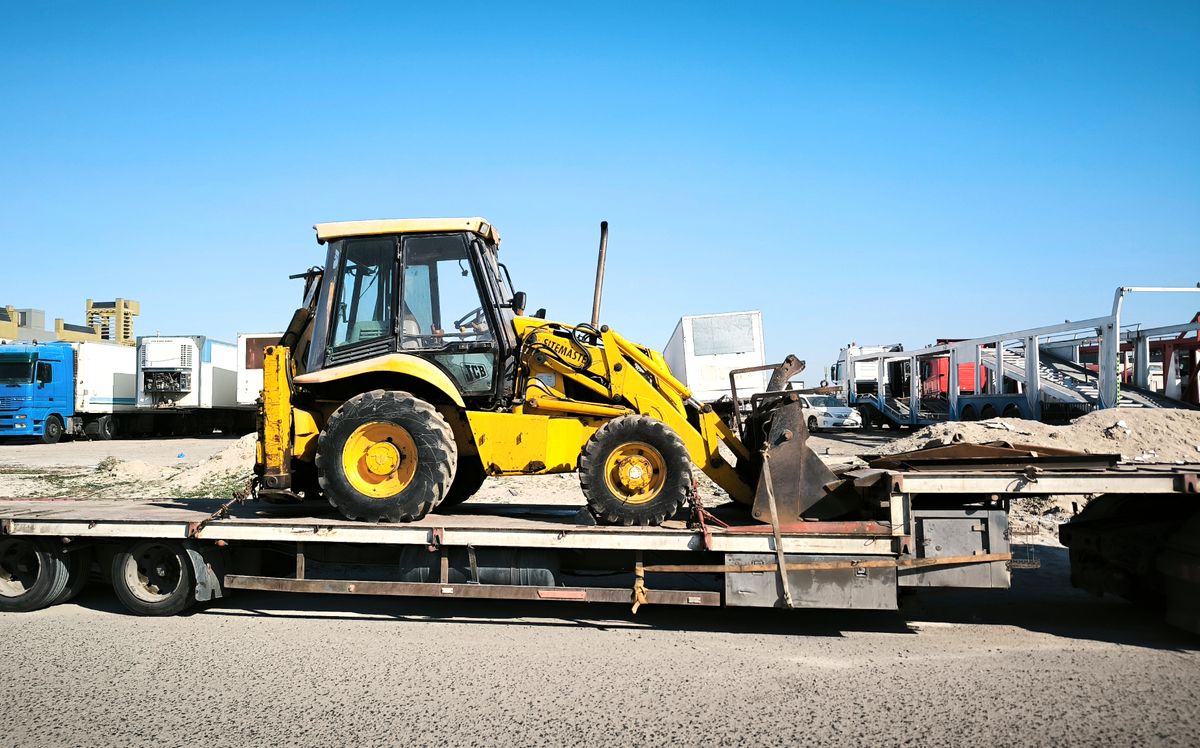
Compare flatbed vs utility trailers for trucking: capacity, cost, uses, and key differences to help you choose the right trailer for your business.
If you’re trying to decide between a flatbed trailer and a utility trailer, the answer comes down to what you haul and how often. Flatbeds are built for heavy, oversized, or awkward freight and require a CDL and a heavy-duty truck. Utility trailers are lighter, cheaper, and often used for smaller loads, but they have lower weight limits and are not meant for commercial over-the-road use. This guide breaks down the differences in cost, capacity, and practical use so you can make the right call.
What Is a Flatbed Trailer?
A flatbed trailer is an open-deck trailer used in commercial trucking. It has no sides or roof, which makes it easy to load from any angle with a crane, forklift, or crane. Common freight includes steel beams, lumber, machinery, pipes, and building materials. Flatbeds range from 48 to 53 feet long and can carry 48,000 to 50,000 pounds of payload, depending on the trailer’s weight and the truck’s legal limits.
Flatbeds require a Class A CDL and a tractor with a fifth wheel. They are common in regional and long-haul trucking, and drivers often need to tarp loads, which adds time and physical work. Rates for flatbed freight are typically higher than dry van because of the extra labor and the need for specialized equipment.
What Is a Utility Trailer?
A utility trailer is a small, open trailer with sides, often used for hauling personal items, landscaping equipment, ATVs, or small construction materials. They come in sizes from 4x6 feet up to 8x20 feet, with GVWRs ranging from 1,800 to 14,000 pounds. Most utility trailers have a single or tandem axle and use a ball hitch, so they can be pulled by a pickup truck, SUV, or even a car, depending on weight.
Utility trailers are not designed for commercial freight. They have lower payload limits, typically 1,500 to 10,000 pounds, and are not built for high-speed highway use over long distances. They are also not subject to DOT regulations unless used for business, in which case you need a DOT number and may need a CDL if the combined weight exceeds 26,001 pounds.
Key Differences: Flatbed vs Utility Trailer
The table below summarizes the main differences between flatbed and utility trailers.
| Feature | Flatbed Trailer | Utility Trailer |
|---|---|---|
| Length | 48 to 53 feet | 4 to 20 feet |
| Payload Capacity | 48,000 to 50,000 lbs | 1,500 to 10,000 lbs |
| GVWR | 80,000 lbs (with truck) | 1,800 to 14,000 lbs |
| Hitch Type | Fifth wheel (tractor) | Ball hitch (pickup/SUV) |
| CDL Required | Yes, Class A | Usually no, unless business use and over 26,001 lbs |
| Typical Use | Commercial freight, heavy machinery, construction materials | Personal hauling, small business, landscaping, recreation |
| Cost (New) | $25,000 to $60,000 | $2,000 to $15,000 |
| Tarping Required | Often yes | No |
| Insurance | Commercial policy, higher rates | Personal auto or small business policy |
Cost Comparison: Purchase and Operating
Purchase price is a major factor. A new 48-foot flatbed trailer costs between $25,000 and $45,000, while a 53-foot model can run $35,000 to $60,000. Used flatbeds are available for $10,000 to $25,000, but inspect for frame cracks and brake issues. Utility trailers are far cheaper: a 6x10 utility trailer with a 2,000-pound GVWR costs $1,500 to $3,000 new. Larger 7x20 models with 10,000-pound capacity run $8,000 to $15,000.
Operating costs also differ. Flatbed trailers require more maintenance: brakes, tires, and suspension are heavy-duty, and tires cost $300 to $500 each. Utility trailers use lighter tires, often $100 to $200 each. Insurance for a flatbed commercial policy runs $5,000 to $12,000 per year, while a utility trailer used for personal hauling may cost $100 to $300 per year to add to your auto policy.
Which One Should You Choose?
Choose a flatbed if you plan to run a commercial trucking business, haul heavy or oversized freight, and have a Class A CDL. Flatbeds offer higher earning potential, but you must factor in tarping time, higher insurance, and the cost of a tractor. If you already own a tractor, a flatbed is a solid investment.
Choose a utility trailer if you need a versatile trailer for personal use, small business deliveries, or occasional hauling of equipment like lawn mowers, ATVs, or building supplies. They are easy to store, cheap to insure, and can be pulled by a half-ton pickup. However, they are not built for heavy loads or long-haul commercial work.
Practical Steps to Take This Week
- List your typical loads: Write down the heaviest item you plan to haul and its weight. If it exceeds 10,000 pounds, you need a flatbed.
- Check your truck’s towing capacity: Look at the GVWR and towing rating in the owner’s manual. If you have a half-ton truck, a utility trailer is likely your only option.
- Get insurance quotes: Call two or three commercial insurance agents and ask for rates on both a flatbed and a utility trailer. This will give you a realistic cost comparison.
- Inspect used trailers: If you’re buying used, check for rust, frame cracks, and brake condition. For flatbeds, look at the deck boards and the condition of the wood or composite.
- Consider your storage: Flatbeds need a lot of space and are often stored in a yard. Utility trailers can fit in a garage or driveway.
FAQ
Can I pull a flatbed trailer with a pickup truck?
No, a flatbed trailer requires a fifth wheel hitch and a heavy-duty tractor. A pickup truck does not have the capacity or the proper hitch to handle a 48-foot flatbed safely.
Do I need a CDL to pull a utility trailer?
It depends. If you use it for personal purposes and the combined weight is under 26,001 pounds, you don’t need a CDL. If you use it for business and the combined weight exceeds 26,001 pounds, you need a Class A CDL.
How much does it cost to tarp a flatbed load?
Tarping costs vary, but drivers often charge $50 to $150 per tarp, and a typical load may require two to four tarps. Some companies pay a flat rate per tarp, while others pay by the hour.
What is the lifespan of a flatbed trailer vs a utility trailer?
A well-maintained flatbed can last 20 years or more, especially if the deck is replaced periodically. Utility trailers typically last 10 to 15 years, but rust and wear on the frame can shorten that.
The Bottom Line
Flatbed trailers and utility trailers serve completely different purposes. Flatbeds are for commercial freight and require a CDL and a tractor, with costs starting around $25,000. Utility trailers are for lighter loads and personal use, with prices starting under $2,000. Assess your hauling needs, budget, and equipment before deciding. If you’re starting a trucking business, a flatbed is the way to go. If you need a versatile trailer for small jobs, a utility trailer is the practical choice.