Truck Tires vs Trailer Tires on Trailers
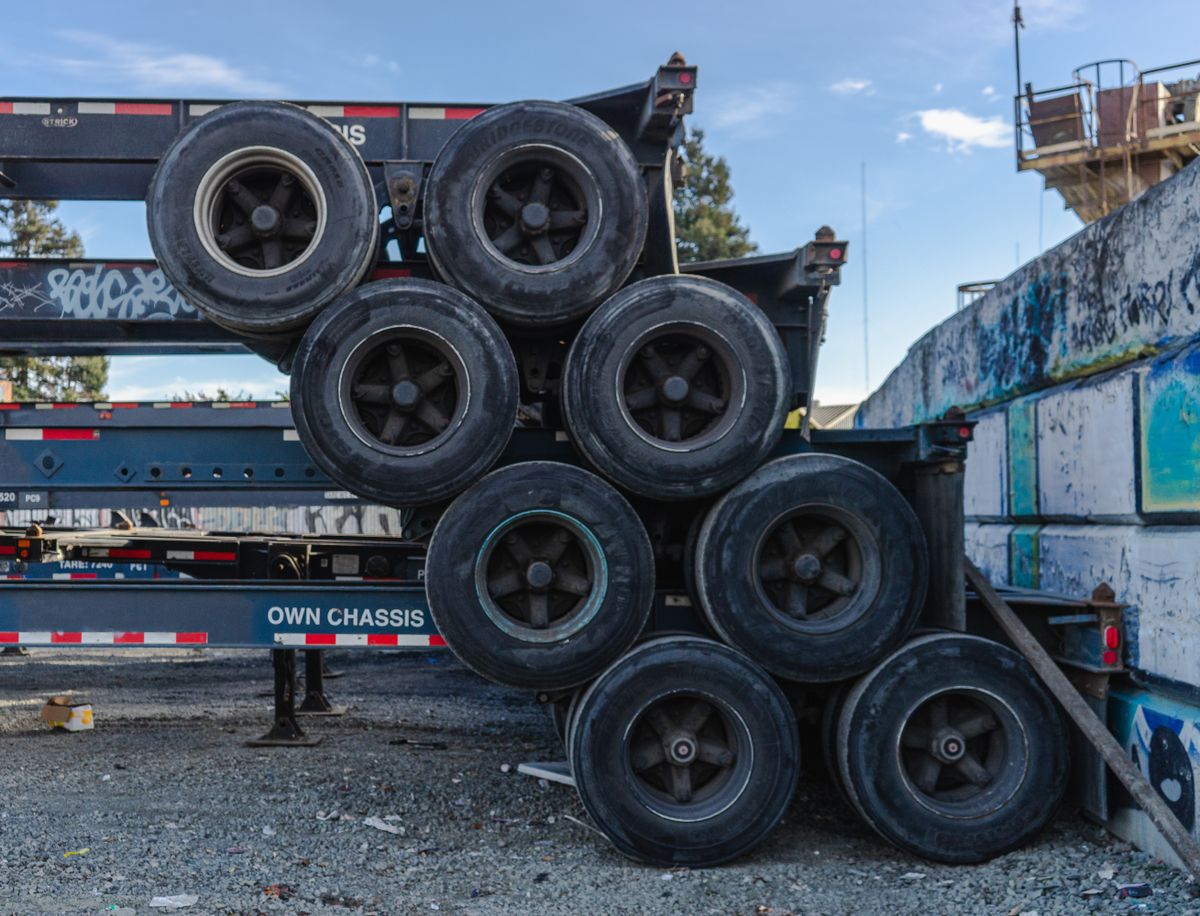
Learn the key differences between truck tires and trailer tires, including construction, load ratings, and maintenance tips for safer, more cost-effective operations.
When it comes to tires on a tractor-trailer, many drivers assume the same rules apply to both the tractor and the trailer. That’s a mistake. Truck tires and trailer tires are designed for different jobs, and using the wrong type or neglecting proper maintenance can lead to blowouts, fines, and costly downtime. This guide breaks down the differences, what to look for, and how to keep both sets in top shape.
Why Truck Tires and Trailer Tires Are Different
Truck tires (steer and drive) are built to handle the weight and torque of the tractor. They have deeper treads for traction, especially on drive axles, and are reinforced to withstand the stresses of steering and braking. Trailer tires, on the other hand, are designed to carry weight without the added forces of steering or driving. They typically have a shallower tread pattern, which reduces rolling resistance and heat buildup, improving fuel economy. The sidewalls are also constructed differently: trailer tires often have a higher load capacity per tire because they operate in a more controlled environment.
Key Differences: Construction, Load, and Tread
Construction: Truck tires use a stronger casing and often have a higher ply rating to handle the torque and heat generated by the drive axles. Trailer tires are built with a more flexible sidewall to absorb road shock, but they are not designed to handle the same level of stress as drive tires.
Load Ratings: Trailer tires are rated to carry a higher percentage of the total weight. For example, a typical 11R22.5 truck tire might have a load index of 146 (6,610 lbs at 105 psi), while a trailer tire of the same size could have a load index of 148 (7,050 lbs). This is because trailer tires are often used in dual configurations, but the difference is still significant.
Tread Depth and Pattern: Drive tires have deep, aggressive treads (usually 22/32” to 26/32”) for traction. Trailer tires have shallower treads (usually 12/32” to 14/32”) to minimize rolling resistance and heat. Steer tires are in between, with tread depths around 18/32” to 20/32” for better handling and water evacuation.
Can You Use Truck Tires on a Trailer?
Technically, you can mount a truck tire on a trailer, but it’s not recommended. The main issue is heat. Truck tires are designed to run at higher temperatures due to the torque and speed of the drive axle. On a trailer, they may run cooler, but the tread pattern is not optimized for trailer use, leading to faster wear and reduced fuel economy. Also, the load rating may be lower, which could be a safety risk if you’re hauling heavy loads. In short, it’s better to use tires specifically designed for trailers.
Can You Use Trailer Tires on a Truck?
Never use trailer tires on the steer or drive axles. Trailer tires are not built to handle the torque, braking, and steering forces of a tractor. Using them on a drive axle can lead to tread separation, blowouts, and loss of control. The only exception is if you’re using them on a lift axle or a tag axle, but even then, it’s safer to stick with tires rated for that application.
Maintenance Tips for Both Tire Types
Proper maintenance is critical for both truck and trailer tires. Here are the key steps:
- Check inflation pressure weekly: Use a calibrated gauge. Underinflation causes heat buildup and blowouts; overinflation reduces traction and causes center wear.
- Inspect tread depth regularly: Use a tread depth gauge. Replace tires when they reach 4/32” for steer, 2/32” for drive, and 2/32” for trailer tires (but check DOT minimums).
- Look for signs of uneven wear: This can indicate alignment issues, improper inflation, or suspension problems.
- Rotate tires as needed: Trailer tires can be rotated, but truck tires have specific positions (steer vs. drive) and should not be swapped without consideration.
- Check for cuts, bulges, or punctures: Any damage should be repaired by a professional.
Comparison Table: Truck vs. Trailer Tires
| Feature | Truck Tires (Steer/Drive) | Trailer Tires |
|---|---|---|
| Primary function | Steering, traction, braking | Load carrying, stability |
| Tread depth | 18/32” to 26/32” | 12/32” to 14/32” |
| Load index (typical) | 146 (6,610 lbs) | 148 (7,050 lbs) |
| Sidewall construction | Stiffer, reinforced | More flexible |
| Heat resistance | High (for torque) | Moderate (for constant speed) |
| Price range (new, 11R22.5) | $250-$450 | $200-$350 |
| Typical lifespan | 3-5 years or 100k-150k miles | 5-7 years or 150k-200k miles |
Note: Prices vary by brand, quality, and region. Always check load ratings and speed ratings for your specific application.
When to Replace: Signs of Wear and Damage
Replace any tire if you see:
- Tread depth below 2/32” (or 4/32” for steer) in any major groove.
- Cuts or punctures larger than 1/4 inch in the tread or sidewall.
- Bulges or blisters on the sidewall.
- Vibration or thumping while driving, which could indicate internal damage.
- Uneven wear patterns that can’t be corrected by alignment or inflation.
Also, check the DOT code on the sidewall. Tires older than 6 years should be inspected by a professional, and many fleets replace tires at 5 years regardless of tread depth.
Cost Considerations: Buying and Maintaining
New truck tires cost between $250 and $450 each, depending on brand and size. Trailer tires are slightly cheaper, ranging from $200 to $350. Retreads are a cost-effective option for drive and trailer positions, but never use retreads on steer axles. A retread can cost $100 to $150, but they may have a shorter lifespan. Factor in the cost of mounting, balancing, and disposal fees when budgeting.
FAQ
Q: Can I mix brands or tread patterns on the same axle? A: It’s not recommended. Mismatched tires can cause handling issues and uneven wear. Always pair tires of the same size, load rating, and tread pattern on the same axle.
Q: How often should I check tire pressure? A: At least once a week, and before every long trip. Use a reliable gauge and check when tires are cold for accurate readings.
Q: What is the minimum tread depth for trailer tires? A: The legal minimum is 2/32” in any groove, but for safety, many fleets replace trailer tires at 4/32” to maintain good wet traction.
Q: Are retreads safe for trailers? A: Yes, retreads are commonly used on trailer axles and are safe if they are properly inspected and maintained. Avoid retreads on steer axles.
The Bottom Line
Truck tires and trailer tires are not interchangeable. Each is engineered for specific demands, and using the wrong type can compromise safety and shorten tire life. Stick with tires designed for the position, maintain proper inflation and tread depth, and replace them when they show signs of wear. By following these guidelines, you’ll reduce the risk of blowouts, improve fuel economy, and save money in the long run.