Average Price of Diesel Last 12 Months
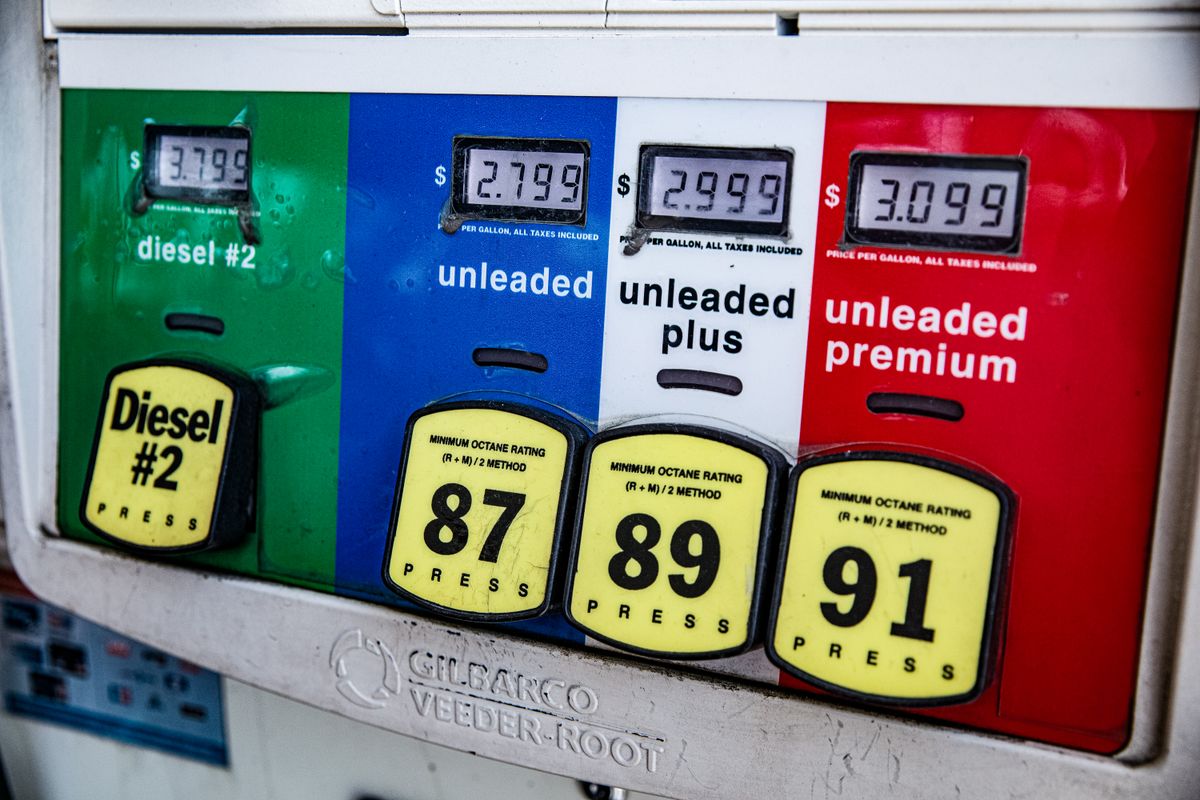
Track diesel prices over the past year, understand trends, and get practical tips to manage fuel costs in 2026.
If you’re asking what diesel has cost over the last 12 months, the short answer is: it ranged from about $3.40 to $4.20 per gallon nationally, with regional spikes and dips. As of early 2026, the national average sits around $3.80, but your actual cost depends on where you fuel, your volume, and your routing. Here’s a breakdown of the past year, what drove the numbers, and how you can use this information to save money this week.
Diesel Price Trends: Last 12 Months (Early 2025 to Early 2026)
Diesel prices in the U.S. over the past year have been shaped by global crude oil swings, refinery maintenance, and seasonal demand. Here’s a month-by-month snapshot based on EIA data (check date: February 2026).
| Month | National Average (per gallon) | Notes |
|---|---|---|
| Feb 2025 | $3.85 | Stable start, moderate demand |
| Mar 2025 | $3.95 | Spring uptick, refinery turnarounds |
| Apr 2025 | $4.05 | Pre-summer build, higher crude |
| May 2025 | $4.15 | Peak spring, supply tight |
| Jun 2025 | $4.10 | Slight dip, but still high |
| Jul 2025 | $3.95 | Summer driving season, mixed |
| Aug 2025 | $3.80 | Drop due to lower crude |
| Sep 2025 | $3.70 | Post-Labor Day slump |
| Oct 2025 | $3.60 | Seasonal low, weak demand |
| Nov 2025 | $3.50 | Continued decline |
| Dec 2025 | $3.45 | Holiday lull, low activity |
| Jan 2026 | $3.70 | Winter spike, cold snap |
| Feb 2026 | $3.80 | Current average, rising slowly |
Note: These are national averages. Your region may differ by $0.20 to $0.50 per gallon. For example, the West Coast often runs $0.50 higher, while the Gulf Coast is typically $0.20 lower.
What Drove the Price Fluctuations?
Several factors influenced diesel prices over the past year:
- Crude oil prices: Brent crude ranged from $70 to $85 per barrel, with OPEC+ decisions and geopolitical tensions causing swings.
- Refinery capacity: Planned maintenance in spring and fall reduced supply, pushing prices up temporarily.
- Seasonal demand: Summer driving and winter heating (for heating oil, which competes for diesel) created predictable peaks.
- Regional logistics: Pipeline disruptions or refinery outages, like a brief Gulf Coast shutdown in September, caused localized spikes.
Understanding these drivers helps you anticipate when to buy. For instance, prices often dip after Labor Day and rise before winter storms.
How to Use This Data to Save Money This Week
You don’t need a crystal ball to cut fuel costs. Here are concrete steps you can take now:
- Check current prices daily: Use apps like GasBuddy or Trucker Path to find the cheapest diesel along your route. Prices can vary by $0.15 to $0.25 between stations in the same area.
- Join a fuel discount program: Major truck stops (Pilot Flying J, Love’s, TA) offer loyalty programs that save $0.05 to $0.10 per gallon. Some credit cards, like the TCS Fuel Card, offer up to $0.15 off per gallon.
- Buy in bulk if you have storage: If you own a tank, purchase when prices dip below $3.60. Even a 500-gallon tank can save $100 on a $0.20 swing.
- Optimize your route: Use TMS software or load boards to minimize empty miles. Cutting 100 deadhead miles saves about 6 gallons of fuel, roughly $23 at current prices.
- Track your fuel economy: If your truck is getting less than 6 mpg, check tire pressure, air filters, and driving habits. Proper maintenance can improve mpg by 5-10%, saving $0.19 to $0.38 per gallon equivalent.
Regional Price Breakdown (Current)
Here’s what you might expect to pay in different regions as of February 2026:
| Region | Average Price per Gallon |
|---|---|
| East Coast | $3.90 |
| Midwest | $3.70 |
| Gulf Coast | $3.60 |
| Rocky Mountain | $3.80 |
| West Coast | $4.30 |
| California (state avg) | $4.60 |
These figures are based on EIA data and may vary by city. For example, Los Angeles often exceeds $5.00, while Houston stays near $3.40.
Fuel Management Strategies for Owner-Operators
If you’re an owner-operator, fuel is your second-largest expense after the truck itself. Here’s how to manage it:
- Use a fuel card with rebates: Cards like EFS or Comdata offer rebates of $0.05 to $0.15 per gallon, depending on volume. A typical owner-operator using 1,000 gallons a month can save $50 to $150 monthly.
- Plan fuel stops around price and distance: Don’t drive 50 miles out of your way to save $0.10 a gallon; that’s a net loss. Calculate the cost of the detour.
- Consider fuel hedging: If you have a steady route, some brokers offer fuel surcharge programs that lock in rates. This protects you from spikes.
- Monitor your MPG: Keep a log. If you notice a drop, address it immediately. A 0.5 mpg loss on a 1,000-mile trip costs $15 to $20 extra.
FAQ
Q: What is the average price of diesel right now? A: As of February 2026, the national average is about $3.80 per gallon, but it ranges from $3.40 in the Gulf Coast to $4.60 in California.
Q: Will diesel prices go up or down in the next few months? A: Historically, prices rise in spring (March to May) as refineries do maintenance and demand increases. Expect a possible $0.20 to $0.30 increase by April, then a dip after Labor Day.
Q: How can I find the cheapest diesel on my route? A: Use apps like Trucker Path or GasBuddy, which show real-time prices at truck stops. Also, check your fuel card’s network for discounts.
Q: Is it worth buying a fuel tank for my truck? A: If you have a dedicated route and can store 100+ gallons, yes. You can buy when prices are low and use it later, saving $0.10 to $0.20 per gallon. But factor in the cost of the tank and installation.
The Bottom Line
Diesel prices over the last 12 months have been volatile, ranging from $3.45 to $4.15 nationally. The key takeaway: don’t rely on averages. Track prices daily, use discounts, and maintain your truck for better fuel economy. By taking the steps above, you can save $100 to $300 per month, depending on your mileage. Stay informed, and you’ll keep more of your hard-earned money in your pocket.