Dump Truck vs Stake Truck
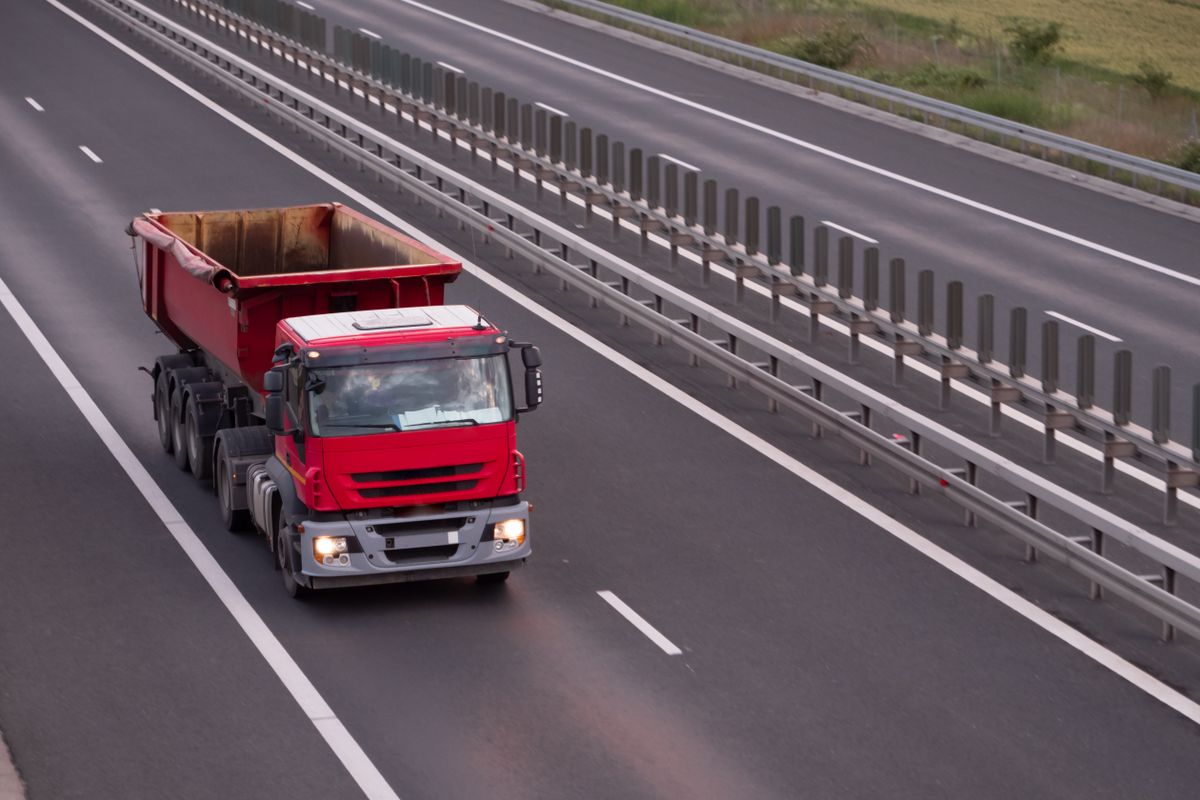
Compare dump trucks and stake trucks for your hauling business: capacities, costs, uses, and which one fits your freight and budget.
If you’re starting a hauling business or adding a truck to your fleet, the choice between a dump truck and a stake truck comes down to what you’ll haul most. Dump trucks excel at loose materials like gravel, sand, and dirt, while stake trucks handle palletized or bulky freight that needs secure, flatbed-style hauling. This guide breaks down the key differences, costs, and practical considerations so you can pick the right tool for your operation.
What Is a Dump Truck?
A dump truck has a hydraulic lift that raises the bed to dump its load out the back. It’s built for loose, heavy materials that flow, like crushed stone, asphalt, or demolition debris. Common configurations include standard dump trucks (straight truck with a dump body), dump trailers (pulled by a tractor), and transfer dump trucks (a main box plus a pup trailer).
Typical payload capacities:
- Straight dump truck (10-wheel, tandem axle): 12 to 16 tons
- Dump trailer (tandem or tri-axle): 15 to 25 tons
- Transfer dump: up to 26 tons
Dump trucks are measured by cubic yards of struck capacity, which is the volume of material level with the top of the bed. A standard 10-yard dump body holds about 10 cubic yards of material, but weight limits often hit first with dense materials like gravel (about 1.4 tons per cubic yard).
What Is a Stake Truck?
A stake truck is a flatbed with removable wooden or metal stakes around the sides and rear. The stakes create a low wall to keep cargo from sliding off, and you can remove them for loading from the side or for oversized items. Stake trucks are common for hauling lumber, pipe, palletized goods, machinery, and building materials.
Payload capacities:
- Single-axle stake truck: 5 to 8 tons
- Tandem-axle stake truck: 10 to 15 tons
Stake beds are typically 16 to 24 feet long, with tie-down rails and stake pockets. They don’t have a hydraulic dump, so loading and unloading require a forklift, pallet jack, crane, or manual labor.
Key Differences at a Glance
| Feature | Dump Truck | Stake Truck |
|---|---|---|
| Primary use | Loose materials (gravel, sand, dirt) | Palletized or bulky freight (lumber, pipe) |
| Unloading method | Hydraulic dump (quick, gravity-assisted) | Manual or forklift (slower) |
| Payload (typical) | 12 to 16 tons (straight truck) | 5 to 15 tons |
| Bed length | 10 to 16 feet (standard) | 16 to 24 feet |
| Versatility | Limited to materials that flow | Can haul a wider range of cargo |
| Cost (new, 2026) | $80,000 to $150,000 | $60,000 to $110,000 |
| Operating cost per mile | $1.50 to $2.50 | $1.20 to $2.00 |
| Insurance (annual) | $8,000 to $15,000 | $6,000 to $12,000 |
Cost Comparison (2026 Figures)
Prices vary by region, brand, and configuration, but these ranges reflect current market averages for new trucks.
- Dump truck (new, tandem axle, 10-yard body): $90,000 to $140,000. Add $15,000 to $25,000 for a dump trailer if you go that route.
- Stake truck (new, tandem axle, 20-foot bed): $70,000 to $110,000. Used models are widely available for $30,000 to $60,000.
- Maintenance: Dump trucks have more hydraulic components that need service (cylinders, pumps, hoses), adding $1,000 to $3,000 per year in upkeep. Stake trucks are simpler, with lower maintenance costs.
- Insurance: Dump trucks are often rated higher due to heavier loads and more frequent stops. Expect $8,000 to $15,000 annually for a dump truck, versus $6,000 to $12,000 for a stake truck.
Which One Should You Choose?
Choose a dump truck if:
- You’ll haul loose materials like gravel, sand, topsoil, or asphalt.
- You want fast unloading at job sites (dump in minutes, not hours).
- You work in construction, excavation, or landscaping.
- You can handle the higher purchase price and maintenance costs.
Choose a stake truck if:
- You’ll haul palletized goods, lumber, pipe, or equipment.
- You need a versatile bed that can handle different cargo shapes.
- You have access to a forklift or pallet jack at loading and unloading points.
- You want a lower entry cost and simpler maintenance.
Practical Steps to Decide This Week
- List your top three freight types. Write down what you’ll haul most in the first year. If it’s loose material, go dump. If it’s pallets or long items, go stake.
- Check your local market. Look at load boards and classifieds to see what rates are being paid for dump vs. stake work in your area. Dump work often pays by the load, while stake work may pay by the mile or by the hour.
- Calculate your break-even. Estimate your monthly payments, insurance, fuel, and maintenance. Compare that to the revenue you can realistically generate. A dump truck might earn $800 to $1,200 per day in peak season, while a stake truck might earn $500 to $800 per day.
- Talk to other owner-operators. Ask in trucking forums or local associations about the demand in your region. They’ll tell you what’s actually moving.
- Consider a used truck first. If you’re new, a used dump or stake truck in good condition can cut your startup costs by 30% to 50%. Get a pre-purchase inspection from a diesel mechanic.
FAQ
Can a stake truck be converted to a dump truck?
Yes, but it’s rarely cost-effective. You’d need to replace the bed with a dump body and install a hydraulic hoist, which can cost $15,000 to $30,000. It’s usually cheaper to sell the stake truck and buy a dump truck.
What are the weight limits for dump and stake trucks?
Federal gross vehicle weight (GVW) limits are 80,000 pounds for a 5-axle combination. A straight dump truck with tandem axles is typically rated at 33,000 to 40,000 pounds GVW. Stake trucks are similar, but the lighter bed means you can carry more payload within the same GVW.
Do I need a CDL to drive a dump or stake truck?
If the truck’s GVWR is over 26,000 pounds, you need a Class B CDL. Most dump and stake trucks in commercial service exceed that, so plan on getting your CDL. Some states have exemptions for farm use, but they don’t apply to commercial hauling.
Which truck holds its value better?
Dump trucks tend to hold value well because there’s constant demand in construction. Stake trucks are also in demand but have a broader market, so resale can be easier. In both cases, a well-maintained truck with service records will fetch 60% to 70% of its original price after 5 years.
The Bottom Line
Dump trucks and stake trucks serve different niches. If you’re hauling loose material, a dump truck is the workhorse you need, despite the higher cost. If you’re moving pallets, lumber, or mixed freight, a stake truck offers versatility and lower entry costs. Evaluate your freight, your budget, and your local market before you buy. Talk to other drivers, run the numbers, and choose the truck that matches the work you’ll actually get. That’s the straight answer.