Dump Truck vs Dumper
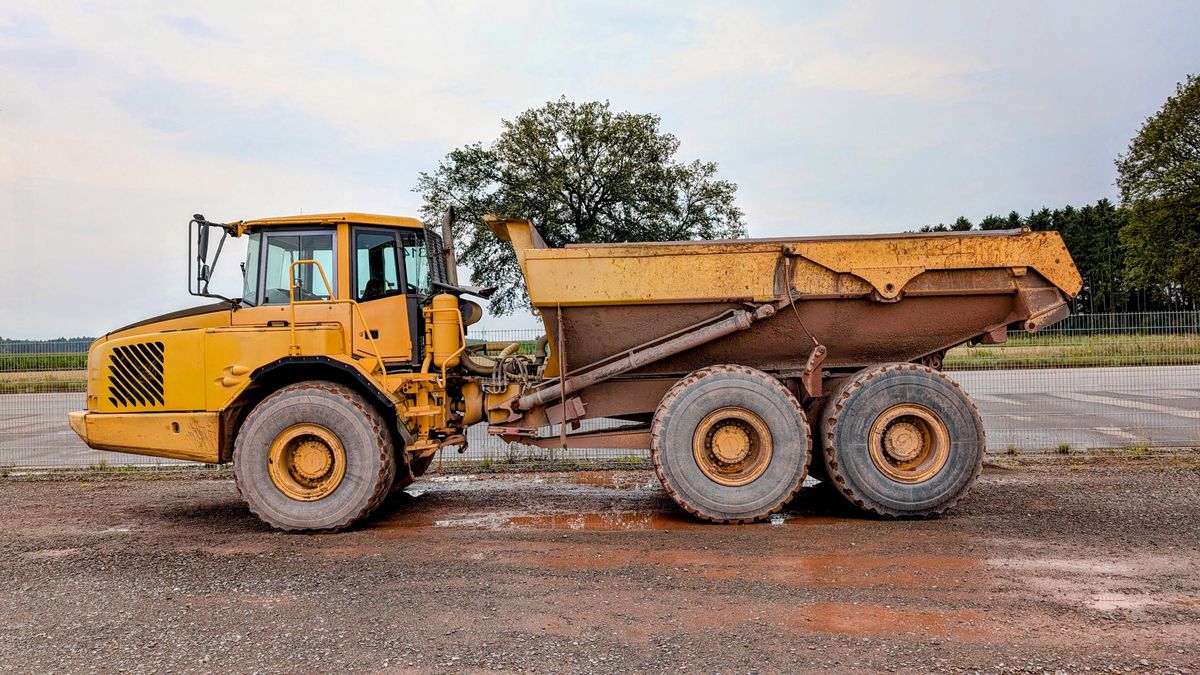
Dump truck vs dumper: what's the difference? Learn key distinctions, uses, costs, and how to choose the right one for your hauling needs.
If you’re new to the heavy equipment world, you might hear “dump truck” and “dumper” used interchangeably. But they are not the same machine. A dump truck is a road-legal truck with a hydraulically tilting bed, built for hauling materials on highways and job sites. A dumper, often called an articulated hauler or site dumper, is an off-road vehicle designed for rough terrain and short hauls. This guide breaks down the differences in design, use, cost, and operation, so you can decide which fits your work.
What Is a Dump Truck?
A dump truck is a conventional truck chassis with a dump body mounted on the frame. It has a front cab, a diesel engine, and a hydraulic lift that raises the bed to dump materials out the back. Dump trucks are street-legal, meaning they can travel on public roads, and they come in various sizes, from light-duty (like a Ford F-550 with a dump body) to heavy-duty (like a Mack Granite or Kenworth T880).
Typical capacities range from 5 to 20 cubic yards for standard models, with payloads from 10,000 to 30,000 pounds. Larger transfer and semi end dumps can haul 20 to 30 cubic yards or more. Dump trucks are used in construction, road work, landscaping, and agriculture. They are efficient for moving materials like gravel, sand, dirt, and asphalt over moderate distances, often 10 to 50 miles.
What Is a Dumper?
A dumper, in the heavy equipment sense, usually refers to an articulated dump truck (ADT) or a compact site dumper. ADTs have a hinged joint between the cab and the dump body, allowing all-wheel steering and articulation for excellent maneuverability on uneven ground. They are not road-legal (except with special permits) and are designed for off-road use on construction sites, quarries, and mines. Compact site dumpers are smaller, often walk-behind or ride-on machines with a skip-style bucket, used for small jobs like landscaping or foundation work.
ADTs range in capacity from 25 to 40 tons (roughly 18 to 28 cubic yards). Compact dumpers carry 1 to 3 tons. They excel on soft, muddy, or steep terrain where a regular dump truck would get stuck. They are also faster on rough ground because of their suspension and articulation.
Key Differences: Dump Truck vs Dumper
Here’s a side-by-side comparison of the two main types:
| Feature | Dump Truck | Articulated Dumper (ADT) |
|---|---|---|
| Road legal | Yes (with DOT compliance) | No (off-road only) |
| Terrain | Paved roads, firm job sites | Rough, soft, steep terrain |
| Maneuverability | Good on roads, limited off-road | Excellent articulation, tight turning |
| Capacity | 5-20 cu yd (typical) | 18-28 cu yd (typical) |
| Payload | 10,000-30,000 lbs | 50,000-80,000 lbs |
| Top speed | 60-70 mph | 30-40 mph |
| Cost (new) | $80,000-$250,000 | $300,000-$700,000 |
| Operating cost | Lower per mile on road | Higher fuel consumption, tires |
| Best for | Hauling to and from sites | Moving material within a site |
Cost Comparison (2026 Figures)
Prices vary by brand, condition, and region, but here are realistic ranges for new and used equipment:
- Light-duty dump truck (e.g., Ford F-550 with dump body): New $60,000-$90,000; used $30,000-$50,000.
- Heavy-duty dump truck (e.g., Mack Granite): New $150,000-$250,000; used $80,000-$150,000.
- Articulated dumper (ADT) 25-ton class: New $350,000-$500,000; used $150,000-$300,000.
- Compact site dumper (1-2 ton): New $15,000-$30,000; used $5,000-$15,000.
Operating costs also differ. A dump truck gets 5-7 mpg on the highway, while an ADT gets 3-5 mpg off-road. Tires for ADTs are larger and more expensive, often $3,000-$5,000 each. Maintenance on ADTs can be higher due to complex articulation joints and off-road wear.
Which One Should You Choose?
Your choice depends on your work:
- If you haul materials on public roads (e.g., from a quarry to a construction site), you need a dump truck. It’s legal, faster, and cheaper to operate per mile.
- If you work on a single job site (e.g., moving earth from a cut to a fill area), an ADT is more productive on rough terrain. It can carry more and won’t get stuck as easily.
- If you do small landscaping or foundation work, a compact dumper is affordable and nimble.
Many contractors own both: a dump truck for deliveries and an ADT for site work. If you’re just starting, rent before you buy to test in your conditions.
Practical Steps to Take This Week
- Assess your typical hauling distances: If most loads are under 5 miles on-site, lean toward a dumper. If you travel on highways, a dump truck is non-negotiable.
- Check local regulations: Dump trucks need DOT numbers, IFTA fuel permits, and a CDL for most sizes. ADTs don’t, but you may need special permits to move them between sites.
- Get insurance quotes: Dump truck insurance runs $8,000-$15,000 per year for commercial use. ADT insurance is often bundled with equipment coverage, costing $2,000-$5,000 per year.
- Compare total cost of ownership: Use a spreadsheet with purchase price, fuel, maintenance, insurance, and resale value. A used dump truck might be more practical for a new owner-operator.
FAQ
Can a dump truck go off-road? Yes, but only on firm ground. Dump trucks can handle gravel roads and mild slopes, but they lack the articulation and traction of an ADT. On soft or steep terrain, they risk getting stuck.
Do I need a CDL to drive a dump truck? For most dump trucks over 26,000 pounds GVWR, yes, a CDL is required. Some light-duty models under that weight may not, but check your state. ADTs are off-road, so no CDL is needed, but you may need a valid driver’s license.
What is the lifespan of a dump truck vs a dumper? A well-maintained dump truck can last 10-15 years or 500,000 miles. ADTs also last 10-15 years, but their off-road use can cause more wear on suspension and articulation. Regular maintenance is key.
Can I finance a dumper like a dump truck? Yes, both can be financed through equipment lenders. Rates vary, but expect 6-10% APR for good credit. Down payments are typically 10-20%. Leasing is also an option for ADTs.
The Bottom Line
Dump trucks and dumpers serve different purposes. A dump truck is your workhorse for road travel and delivering materials. A dumper is your off-road specialist for moving large volumes on rough sites. Choose based on where you’ll drive, what you’ll haul, and your budget. If you’re unsure, rent both for a week and track productivity. That real-world data will tell you which machine pays for itself faster.