Drayage vs Demurrage
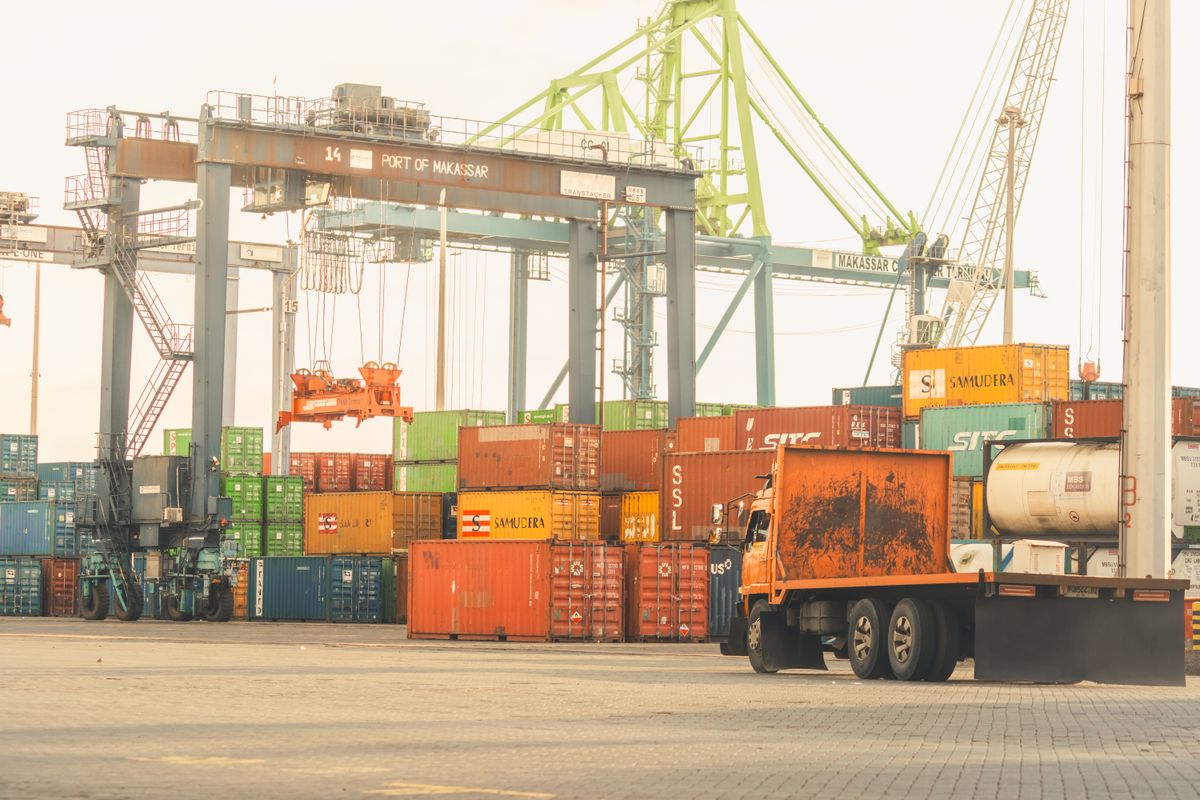
Understand the difference between drayage and demurrage, their costs, and how to avoid fees. Practical tips for truckers and owner-operators.
If you’re new to drayage, you’ve probably heard the terms “drayage” and “demurrage” thrown around. They sound similar but mean very different things. Drayage is the trucking service you provide: moving containers from a port or rail ramp to a destination. Demurrage is a fee charged when cargo stays at a terminal longer than the free time allowed. This guide breaks down the differences, what they cost, and how to avoid costly delays.
What Is Drayage?
Drayage is a specific type of trucking that involves short hauls, usually within a 50 to 150 mile radius of a port, rail yard, or warehouse. The job is to pick up a container or trailer and deliver it to its next stop, which could be a distribution center, a customer’s dock, or another terminal. Drayage is the backbone of intermodal freight: it connects ships and trains to the final mile of delivery.
Drayage loads are often paid by the move, not by the mile. Rates vary widely depending on the lane, the port, and the current market. In 2026, typical drayage rates range from $100 to $300 per move for local hauls, with longer or more complex moves paying more. Some drayage companies charge by the hour, usually $60 to $100 per hour, plus fuel surcharges.
What Is Demurrage?
Demurrage is a penalty fee that shipping lines or terminal operators charge when a container sits on their property past the free time period. Free time is typically 3 to 5 days for import containers, but it can vary by port and carrier. Once free time expires, the clock starts, and you owe money for every day the container remains.
Demurrage fees are charged per container per day. In 2026, typical rates range from $50 to $150 per day for a standard 20-foot container, and $100 to $250 per day for a 40-foot container. Some terminals charge even more during peak seasons. If the container is not picked up after a certain number of days, the carrier may move it to a storage yard, and you’ll face additional storage fees.
Key Differences Between Drayage and Demurrage
The main difference is that drayage is a service you perform and get paid for, while demurrage is a cost you incur if things go wrong. Drayage is proactive: you’re moving cargo. Demurrage is reactive: it’s a penalty for delays. Here’s a quick comparison:
| Aspect | Drayage | Demurrage |
|---|---|---|
| What it is | A trucking service | A penalty fee |
| Who pays | The customer pays you | You or the customer pays the terminal |
| When it applies | Every time you move a container | Only when cargo exceeds free time |
| Cost | $100-$300 per move | $50-$250 per day per container |
| Who controls it | You and your dispatcher | The terminal and shipping line |
| How to avoid it | Good planning and scheduling | Track free time and pick up on time |
How Demurrage Affects Drayage Drivers
As a drayage driver, you’re often the one who gets the blame when a container sits too long. But demurrage is not always your fault. Sometimes the customer isn’t ready to receive the cargo, or the terminal is congested and you can’t get in. Still, if you’re the one who arranged the pickup, you may be responsible for the fee.
Many drayage companies pass demurrage charges on to the customer, but if you’re an owner-operator, you might end up eating the cost if you didn’t have a clear agreement. That’s why it’s critical to understand who is responsible for demurrage before you accept a load.
Practical Steps to Avoid Demurrage Fees
You can’t control everything, but you can reduce your risk. Here are steps you can take this week:
- Check free time before you accept a load. Ask the broker or customer how many free days the container has. If it’s already been sitting for 3 days, you have only a day or two to get it out.
- Track container status daily. Use the terminal’s online portal or a tracking app to see when the container arrived and when free time expires.
- Communicate with the customer early. Confirm the delivery appointment before you pick up the container. If the customer can’t take it, you need to know before you drive to the terminal.
- Have a backup plan. If the customer is not ready, ask the terminal if you can move the container to a warehouse or another location to avoid demurrage.
- Negotiate responsibility in your contract. Make sure your rate confirmation states who pays for demurrage if it occurs. If the customer causes the delay, they should pay.
The Cost of Demurrage in Real Terms
Let’s say you pick up a 40-foot container at the Port of Los Angeles. Free time is 4 days. The container arrived on Monday, and you pick it up on Thursday, just in time. No fee. But if you wait until Friday, you owe one day of demurrage, maybe $150. If you wait a week, that’s $1,050. That can wipe out your profit on the move.
In 2026, some ports have seen demurrage rates spike to $300 per day during peak season. That’s why it’s essential to keep an eye on the calendar and stay in constant communication with all parties.
FAQ
Q: Can I pass demurrage charges to my customer? A: Yes, if your contract says so. Many drayage agreements include a clause that says the customer is responsible for demurrage if the delay is on their end. Always get it in writing.
Q: What’s the difference between demurrage and detention? A: Demurrage is for containers sitting at the port or rail ramp. Detention is for containers sitting at the customer’s location after you’ve delivered them. Both are fees for exceeding free time, but they apply at different points.
Q: How can I check free time for a container? A: Most shipping lines have online portals where you can enter the container number and see the arrival date, free time, and any charges. Your dispatcher or broker can also provide this info.
Q: What happens if I can’t pick up a container before free time expires? A: You’ll be charged demurrage. If you anticipate a delay, contact the terminal or shipping line to see if you can get an extension, but don’t count on it. The best move is to communicate early and often.
The Bottom Line
Drayage and demurrage are two sides of the same coin. Drayage is your job, and demurrage is a penalty that can eat into your earnings. The key is to stay informed: know your free time, track your containers, and communicate with everyone involved. By doing that, you can keep demurrage off your bill and keep your drayage business profitable.