All About the Diesel Engine Starting System
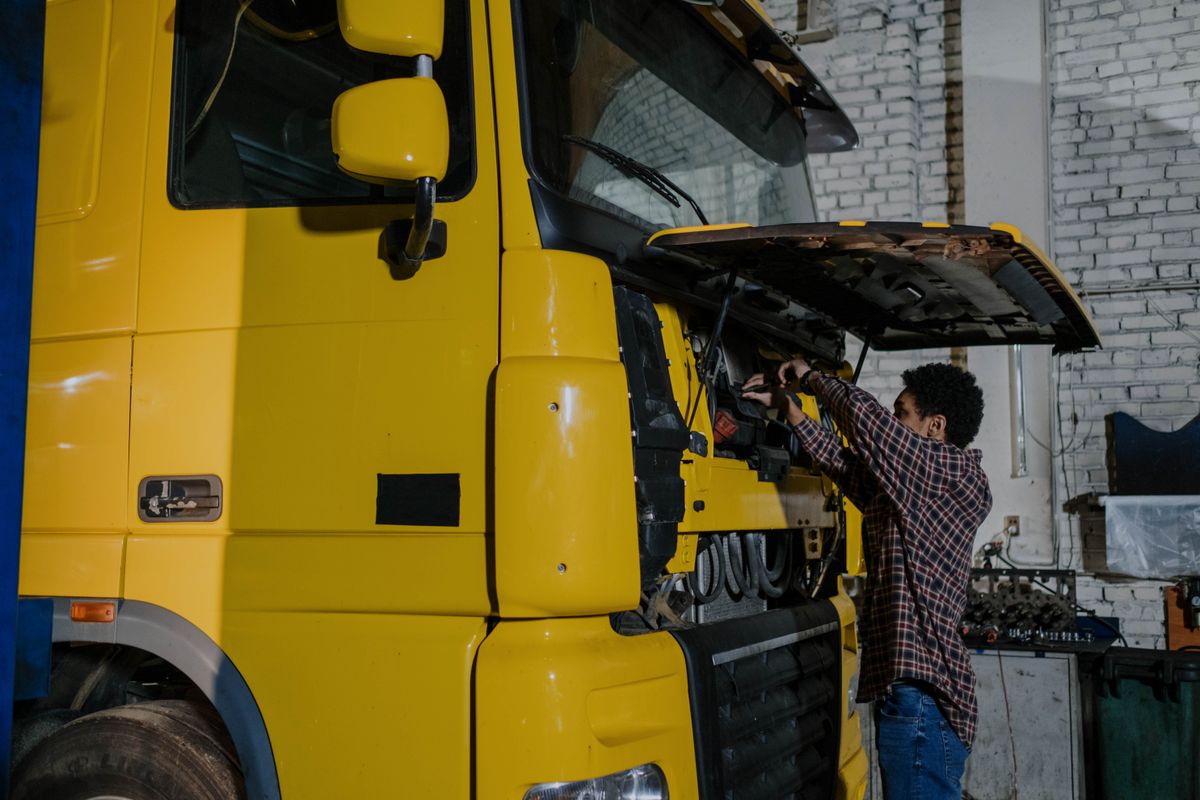
Learn how diesel engine starting systems work, common failure points, and practical maintenance tips to avoid costly breakdowns.
A diesel engine starting system is more than just a battery and a starter motor. It’s a coordinated network of electrical and mechanical components that must work together to crank the engine fast enough for compression ignition. When it fails, you’re stuck, often far from help. This guide covers the key parts, how they work, common problems, and what you can do to keep your rig starting reliably.
How a Diesel Starting System Works
Unlike gasoline engines, diesel engines don’t use spark plugs. They rely on high compression to heat the air in the cylinders to the point where injected fuel ignites. To achieve that compression, the starter motor must crank the engine at a minimum speed, typically 150 to 250 RPM for most highway diesels. If cranking speed drops below that, the engine won’t fire.
The starting system has three main circuits: the battery circuit, the starter circuit, and the control circuit. The battery circuit includes the batteries, cables, and terminals. The starter circuit includes the starter motor, solenoid, and heavy-gauge cables. The control circuit includes the ignition switch, neutral safety switch, and relay.
When you turn the key, the control circuit energizes the starter solenoid, which connects the battery to the starter motor. The starter motor then engages a pinion gear with the flywheel ring gear and rotates the engine. Once the engine starts and you release the key, the pinion disengages.
Key Components and Their Roles
Batteries
Most Class 8 trucks use two or three 12-volt batteries wired in parallel to provide 12 volts and high cranking amps. A typical group 31 battery delivers 950 to 1,150 cold cranking amps (CCA). For a diesel, you need at least 1,500 to 2,000 CCA total. Battery voltage should be 12.6 volts or higher when fully charged. At 12.2 volts, it’s about 50% charged; at 11.9 volts, it’s nearly dead.
Starter Motor
Diesel starters are heavy-duty units. They draw 300 to 500 amps while cranking, sometimes more in cold weather. Most are gear-reduction or direct-drive types. Gear-reduction starters are smaller and lighter but produce more torque. A typical starter for a 12-liter engine costs $300 to $800 for a remanufactured unit, $500 to $1,200 for new.
Solenoid
The solenoid is an electromagnetic switch that pushes the starter pinion into the flywheel and closes the high-current circuit. It’s often mounted on the starter. A faulty solenoid can cause a click but no crank. Replacing a solenoid runs $50 to $150 for the part, plus labor if you don’t do it yourself.
Glow Plugs or Intake Heater
Cold starts are harder because compression heat is lost to cold cylinder walls. Glow plugs (in smaller diesels) or an intake grid heater (in larger engines) preheat the air. Glow plugs typically draw 10 to 15 amps each and should heat up in 5 to 10 seconds. A failed glow plug can cause white smoke and rough idle on cold starts. Replacing a set of glow plugs costs $100 to $300 for parts.
Battery Cables and Connections
Corroded or loose cables are a leading cause of starting problems. Voltage drop across a bad connection can reduce cranking speed dramatically. Check for clean, tight connections at both ends of every cable. Use a digital multimeter to measure voltage drop while cranking; it should be under 0.5 volts on each cable.
Common Starting System Failures
- Dead or weak batteries: The most common issue. Batteries lose capacity in cold weather. A battery at 0°F delivers only about 60% of its rated CCA.
- Corroded terminals: White or blue corrosion acts as an insulator. Clean with a wire brush and baking soda solution.
- Faulty starter motor: Worn brushes, bad bearings, or a broken armature. Symptoms include slow cranking, grinding noises, or a burning smell.
- Bad solenoid: Clicking sound but no cranking. Test with a voltmeter across the solenoid terminals.
- Loose or broken grounds: The engine block must be grounded to the battery negative. A poor ground can cause all sorts of electrical gremlins.
- Glow plug failure: Hard starting in cold weather, excessive white smoke, or a rough idle until warm.
Maintenance Tips to Prevent Starting Problems
- Test batteries monthly: Use a load tester, not just a voltmeter. Replace batteries that fail the load test. Most batteries last 3 to 5 years.
- Clean terminals and cables: Every 3 months, disconnect and clean the terminals and cable ends. Apply a thin coat of dielectric grease.
- Check belt tension: The alternator belt should have about 1/2 inch of play. A loose belt reduces charging output.
- Inspect starter mounting bolts: Loose bolts can cause misalignment and damage the flywheel ring gear.
- Use the right oil: In cold climates, use a synthetic 5W-40 or 0W-40 oil. Thicker oil increases cranking resistance.
- Keep the fuel system primed: Air in the fuel lines can prevent starting. If you run out of fuel, you’ll need to prime the system.
Troubleshooting a No-Start Condition
If your engine won’t crank, follow these steps:
- Check battery voltage: Should be 12.6V or higher. If below 12.2V, charge or jump-start.
- Turn on the headlights: If they’re dim, the battery is weak. If they go out when you hit the starter, there’s a bad connection.
- Listen for the solenoid click: A single click means the solenoid is engaging, but the starter may be bad. Rapid clicking means low battery voltage.
- Test the neutral safety switch: If the truck won’t crank in Park or Neutral, the switch may be faulty. Try shifting to Neutral and starting.
- Check for voltage at the starter: Use a multimeter to see if 12V is present at the starter’s main terminal when the key is turned. If not, trace the wiring.
Cost of Repairs and Replacement
Here are typical 2026 price ranges for common starting system repairs:
| Component | Part Cost | Labor Cost | Total Range |
|---|---|---|---|
| Battery (each) | $150-$250 | $0-$50 | $150-$300 |
| Starter (reman) | $300-$800 | $150-$300 | $450-$1,100 |
| Solenoid | $50-$150 | $100-$200 | $150-$350 |
| Glow plug set | $100-$300 | $200-$400 | $300-$700 |
| Battery cables | $50-$150 | $50-$100 | $100-$250 |
These are estimates; actual costs vary by location and shop rates.
FAQ
How often should I replace my diesel truck batteries?
Most batteries last 3 to 5 years. Have them load-tested annually after the third year, and replace them if they fail. Cold weather accelerates aging.
Can I jump-start a diesel truck with a gasoline vehicle?
It’s not recommended. A diesel needs much more cranking amps. Use a heavy-duty jump pack or another diesel truck. If you must use a gas vehicle, let it run for a few minutes to charge the batteries, then attempt to start.
Why does my truck crank slowly in cold weather?
Cold oil is thicker, increasing resistance. Batteries also produce less power in cold temperatures. Use the correct cold-weather oil and ensure batteries are fully charged. Block heaters can help.
What’s the difference between a glow plug and an intake heater?
Glow plugs are small heating elements inside each cylinder. Intake heaters are a single grid in the air intake. Both preheat the air for cold starts. Glow plugs are common in smaller diesels; intake heaters are common in larger engines.
The Bottom Line
The diesel starting system is robust but demands regular attention. Keep batteries charged and clean, check cables and connections, and listen for warning signs like slow cranking or clicking. A little preventive maintenance goes a long way to avoid a tow bill and downtime. If you do need repairs, budget realistically: a full starter replacement can set you back $500 to $1,100, but catching a bad connection early costs nothing but time. Know your system, test it regularly, and you’ll keep rolling.