Box Truck vs Tractor Trailer
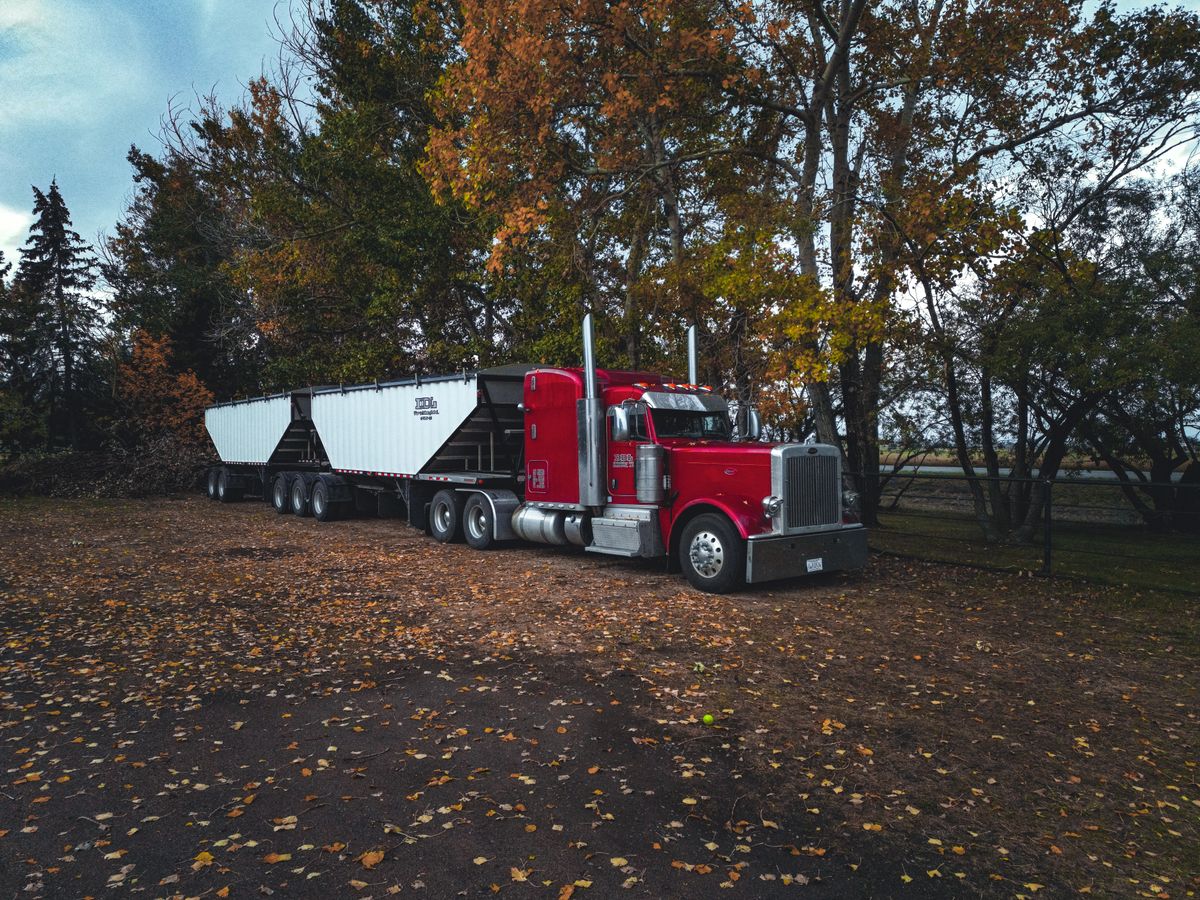
Compare box trucks and tractor trailers for hauling: costs, licensing, payload, and use cases. Find out which fits your business in 2026.
If you’re starting a trucking business, the first big decision is what to drive: a box truck or a tractor trailer. Each has its own costs, licensing requirements, and best use cases. This guide breaks down the differences so you can choose based on your budget, target freight, and lifestyle.
Cost of Entry and Operating Expenses
Box Truck: You can buy a used box truck (e.g., a 26-foot Isuzu or Freightliner) for $25,000 to $60,000. New ones run $70,000 to $110,000. Operating costs are lower: diesel or gas, 10-14 mpg, and insurance runs $300 to $600 per month for a new operator. Maintenance is simpler, with fewer parts and cheaper tires.
Tractor Trailer: A used sleeper tractor (e.g., Freightliner Cascadia) costs $40,000 to $80,000; new ones are $150,000 to $200,000. Add a trailer: $20,000 to $50,000 used, $40,000 to $80,000 new. Fuel economy is 6-8 mpg, and insurance is $800 to $1,500 per month. Maintenance is heavier: more oil, more tires (18 vs 6), and more downtime.
Key point: Box trucks are cheaper to start and run, but they pay less per load.
Licensing and Regulations
Box Truck: If your truck has a GVWR under 26,001 pounds, you need a standard Class C license (or Class B in some states). No medical card required unless you cross state lines for interstate commerce, but even then, if under 26,001, you may not need a CDL. However, many box trucks (like a 26-foot) are over 26,000 GVWR, so you’ll need a Class B CDL. Check your state’s rules.
Tractor Trailer: You need a Class A CDL, which requires passing written and skills tests, plus a medical card. You also must comply with DOT regulations, including drug testing, if you operate interstate. ELD (electronic logging device) is mandatory for both if you’re subject to hours of service, but box trucks under 26,001 GVWR are often exempt.
Practical step: Check your state’s CDL manual or call the DMV to confirm what license you need for the exact truck you plan to buy.
Payload and Freight Types
Box Truck: Payload ranges from 5,000 to 10,000 pounds, depending on the truck. You can haul general freight, appliances, furniture, and e-commerce packages. You’re limited to LTL (less-than-truckload) or local deliveries. You can’t haul palletized freight that requires a forklift unless you have a liftgate.
Tractor Trailer: A standard 53-foot dry van hauls 45,000 to 48,000 pounds of freight. You can take full truckloads (FTL), which pay more per mile. You can also haul specialized loads like refrigerated, flatbed, or tanker, which command higher rates.
Key point: If you want to haul full loads and make more per mile, a tractor trailer is the way to go. If you prefer local, multi-stop deliveries, a box truck is more agile.
Income Potential
Box Truck: Owner-operators can gross $2,500 to $4,000 per week, but expenses eat 30-40%. Net income might be $1,500 to $2,500 per week, depending on lanes and backhauls. Loads pay $1.50 to $2.50 per mile, but you often get paid by the hour or per stop for local work.
Tractor Trailer: OTR dry van rates average $1.80 to $2.20 per mile in 2026, but with fuel surcharges, you might see $2.50. A driver running 2,500 miles per week can gross $4,500 to $6,000. After expenses (fuel, maintenance, insurance, payments), net is $2,000 to $3,500 per week. Specialized hauling (reefer, flatbed) can pay 20-30% more.
Example: A box truck running 500 miles per day at $2.00/mile grosses $1,000 per day, but you’ll only get that if you have consistent freight. A tractor trailer running 500 miles at $2.20/mile grosses $1,100, but you have higher costs.
Lifestyle and Work Schedule
Box Truck: Most box truck work is local or regional, meaning you’re home daily or every few days. You’ll deal with city traffic, tight docks, and lots of stops. Hours are often 8-12 per day, and you might work weekends.
Tractor Trailer: OTR trucking means you’re on the road for 1-3 weeks at a time. You’ll sleep in the sleeper berth, eat at truck stops, and deal with long hours of driving. But you have more control over your schedule if you’re an owner-operator. You can also do regional or dedicated runs that get you home weekly.
Consideration: If you have family obligations, a box truck might be better. If you’re single and want to maximize income, a tractor trailer is the classic choice.
Comparison Table
| Factor | Box Truck | Tractor Trailer |
|---|---|---|
| Purchase price (used) | $25,000-$60,000 | $60,000-$130,000 (tractor + trailer) |
| CDL required | Class B (if over 26,000 GVWR) | Class A |
| Payload | 5,000-10,000 lbs | 45,000-48,000 lbs |
| Fuel economy | 10-14 mpg | 6-8 mpg |
| Insurance (monthly) | $300-$600 | $800-$1,500 |
| Typical net income | $1,500-$2,500/week | $2,000-$3,500/week |
| Home time | Daily or every few days | 1-3 weeks OTR |
How to Decide: Practical Steps
- Calculate your budget: Add up your savings and financing options. If you can’t afford a $60,000 down payment, start with a box truck.
- Get your CDL: If you’re leaning tractor trailer, start studying for your Class A permit now. For box truck, check if you need a Class B.
- Test drive both: Rent a box truck for a day, and if possible, ride along with a trucker to see the lifestyle.
- Research freight demand in your area: Use load boards like DAT or Truckstop.com to see what loads are available. Box truck loads are often local; tractor trailer loads are often long-haul.
- Talk to an insurance agent: Get quotes for both. Insurance can be a dealbreaker.
FAQ
Q: Can I start with a box truck and upgrade later? A: Yes, many drivers start with a box truck to learn the business, then sell it and buy a tractor trailer once they have experience and capital. Just be aware that you’ll need to get a Class A CDL when you upgrade.
Q: Do box trucks require a CDL? A: It depends on the GVWR. If the truck is over 26,000 pounds, you need at least a Class B CDL. If under, a standard license may suffice, but you still need a medical card if you cross state lines for commerce.
Q: Which is better for local deliveries? A: Box trucks are better for local deliveries because they’re easier to maneuver in cities and fit in standard parking spots. Tractor trailers need more space and are often restricted from certain roads.
Q: What are the hidden costs of a tractor trailer? A: Beyond purchase price, you have higher fuel, maintenance, tolls, and insurance. Also, you may need to pay for parking when you’re not on the road, which can be $50-$200 per month.
The Bottom Line
Choose a box truck if you want lower startup costs, local work, and more home time. Choose a tractor trailer if you want higher income potential, the ability to haul full loads, and you’re willing to live on the road. Both can be profitable, but they serve different markets. Start with a clear plan, budget, and the right license, then commit to learning the business side as much as the driving.