Car Carrier vs Tow Truck
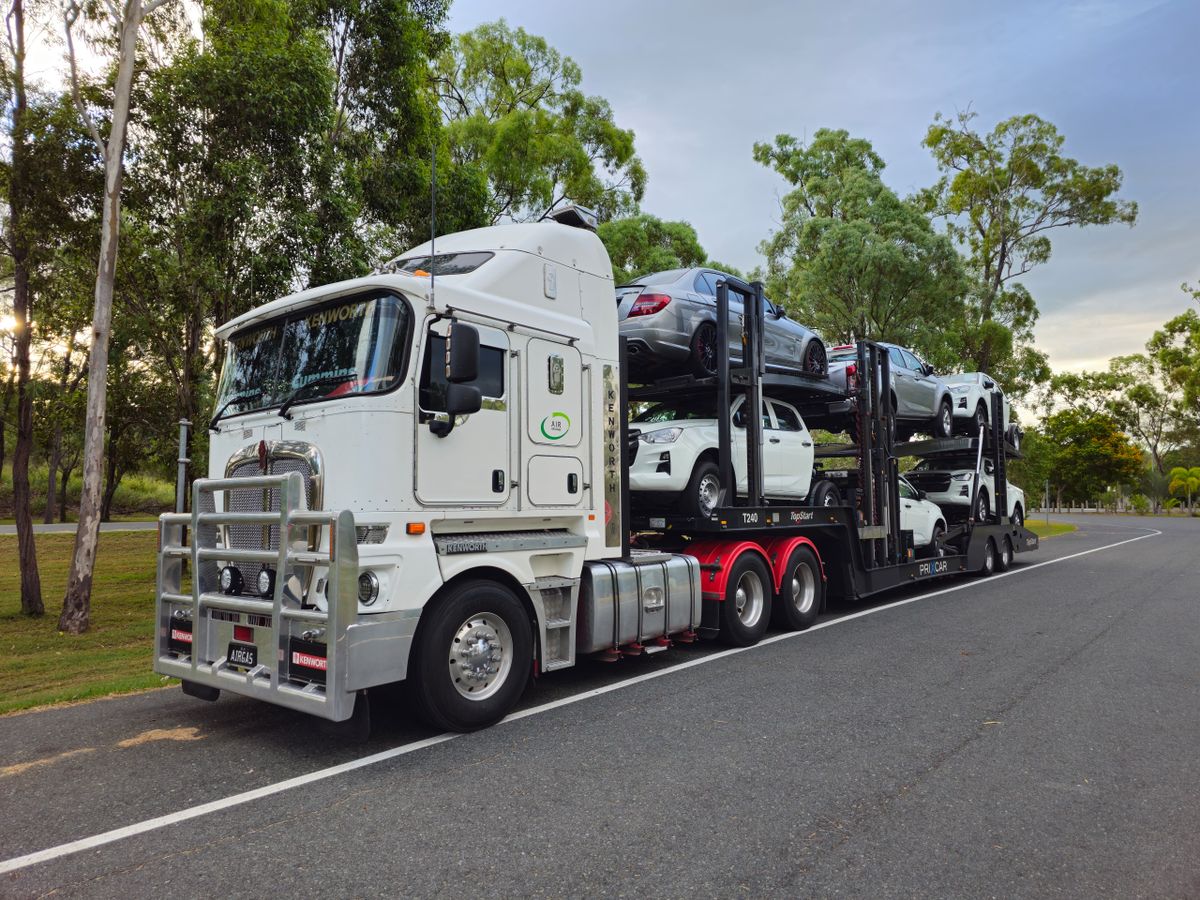
Compare car carrier vs tow truck for auto transport: costs, uses, pros, cons, and how to choose the right equipment for your business in 2026.
If you’re starting an auto transport business or adding to your fleet, you need to know the difference between a car carrier and a tow truck. The short answer: a car carrier hauls multiple vehicles on a flatbed with ramps, while a tow truck lifts one vehicle by its wheels or frame. Your choice depends on the type of loads you want to haul, your budget, and your target market. Here’s a practical breakdown to help you decide.
What Is a Car Carrier?
A car carrier, also known as an auto transport trailer, is a flatbed trailer designed to carry multiple vehicles at once. It can be an open carrier (exposed to weather) or an enclosed carrier (protected). Most carriers hold 5 to 10 cars, depending on size and configuration. They are the standard for dealership deliveries, auction transport, and long-distance moves.
Key specs:
- Capacity: 5-10 vehicles (typical 7-8)
- Trailer length: 50-75 feet
- GVWR: 20,000-30,000 lbs
- Loading: hydraulic ramps, winch, or drive-on
Cost to buy: New open carriers range from $60,000 to $120,000. Enclosed carriers run $100,000 to $200,000+. Used models start around $30,000.
Operating costs: Insurance runs $8,000 to $15,000 per year for commercial auto transport. Maintenance averages $0.15 to $0.25 per mile. Fuel is the big variable, around $0.30 to $0.50 per mile depending on truck and load.
Pros:
- Higher revenue per trip (multiple cars)
- Lower per-vehicle cost for customers
- Ideal for dealership contracts
- Can haul non-running vehicles with a winch
Cons:
- Higher upfront investment
- Requires a CDL (Class A) and medical card
- More complex backing and maneuvering
- Heavier loads mean more wear on brakes and tires
What Is a Tow Truck?
A tow truck is a vehicle designed to lift and tow a single car. There are three main types: wheel-lift (uses a metal yoke), hook-and-chain (older, less common), and flatbed (a small carrier that carries one vehicle). For auto transport, flatbed tow trucks are the most common because they avoid damage to the towed vehicle.
Key specs:
- Capacity: 1 vehicle (up to 10,000 lbs for light-duty)
- Truck length: 20-25 feet
- GVWR: 10,000-26,000 lbs (light to medium duty)
- Loading: hydraulic lift or wheel-lift
Cost to buy: New flatbed tow trucks range from $60,000 to $100,000. Used models start around $25,000. Wheel-lift tow trucks are cheaper, around $40,000 to $70,000 new.
Operating costs: Insurance for towing runs $5,000 to $10,000 per year. Maintenance is lower than a carrier, around $0.10 to $0.20 per mile. Fuel is similar, $0.25 to $0.40 per mile.
Pros:
- Lower upfront cost
- Easier to drive and park
- No CDL required for most light-duty tow trucks (under 26,000 GVWR)
- Great for roadside assistance and local towing
Cons:
- Only one vehicle per trip
- Lower revenue per load
- Limited to lighter vehicles unless you go heavy-duty
- Not ideal for long-distance dealership work
Comparison Table: Car Carrier vs Tow Truck
| Feature | Car Carrier | Tow Truck (Flatbed) |
|---|---|---|
| Capacity | 5-10 vehicles | 1 vehicle |
| Typical load | Dealership, auction, long-haul | Local towing, roadside, short-haul |
| New price range | $60,000-$200,000 | $40,000-$100,000 |
| Used price range | $30,000-$80,000 | $20,000-$50,000 |
| Insurance (annual) | $8,000-$15,000 | $5,000-$10,000 |
| CDL required? | Yes (Class A) | No (if under 26,000 GVWR) |
| Revenue per trip | $1,000-$3,000 (depending on distance) | $100-$500 (local) |
| Operating cost per mile | $0.50-$0.75 | $0.35-$0.60 |
Which One Should You Choose?
Your choice depends on your business model and goals.
Choose a car carrier if:
- You want to work with dealerships or auction houses
- You plan to haul multiple cars on long routes
- You have the capital for a bigger investment
- You’re comfortable getting a CDL
Choose a tow truck if:
- You’re starting with limited funds
- You want to do local towing and roadside assistance
- You prefer simpler operations with less paperwork
- You want to avoid CDL requirements (stick to light-duty)
Practical Steps to Take This Week
- Research your local market. Check load boards like Central Dispatch or uShip to see what’s in demand in your area. If there are many dealerships, carriers win. If there’s a lot of broken-down cars, tow trucks win.
- Get insurance quotes. Call two or three commercial auto insurance agents. Ask for quotes on both a carrier and a tow truck. This gives you real numbers for your budget.
- Check CDL requirements. If you want a carrier, you’ll need a Class A CDL. Start the process now: get a learner’s permit, find a school, or hire a driver with a CDL.
- Calculate your break-even. Use the operating costs above to estimate your monthly expenses. Divide by your expected revenue per trip to see how many trips you need to cover costs.
- Talk to other operators. Join forums or Facebook groups for auto transporters. Ask about their experiences with carriers vs tow trucks. Real-world advice is gold.
FAQ
Can a tow truck haul multiple cars? No, a standard tow truck handles one vehicle at a time. Some heavy-duty tow trucks can tow a car and a trailer, but that’s rare and requires special licensing.
Do I need a CDL to drive a car carrier? Yes, if the combined weight of the truck and trailer exceeds 26,000 pounds, which is almost always the case with a loaded car carrier. You need a Class A CDL.
Which is more profitable: car carrier or tow truck? Carriers have higher revenue per trip, but also higher costs. Tow trucks have lower revenue but also lower overhead. Profitability depends on your volume and market. A carrier doing 4 trips a week at $1,500 each grosses $6,000, while a tow truck doing 20 tows a week at $150 each grosses $3,000. But the carrier’s costs are higher.
Can I start with a tow truck and upgrade later? Yes, many operators start with a tow truck for local work, build capital, then buy a carrier. That’s a smart way to learn the business without a huge initial investment.
The Bottom Line
Car carriers and tow trucks serve different purposes. If you want to haul multiple vehicles long distances, a carrier is the right tool. If you want to start small with local towing, a tow truck is more accessible. Look at your budget, your target market, and your willingness to get a CDL. Then run the numbers with real insurance quotes and load board data. That will tell you which one fits your plan. Start with a used tow truck if you’re unsure, and grow from there.